

Lec Loses 60mw Imports -Ivorian fault squeezes LEC’s dry-season grid
MONROVIA – Liberia’s power grid has just lost its cushion. A fault at a transmission substation has cut all imports from Côte d’Ivoire. That removes about 60 megawatts from a system already short of supply. The timing could hardly be worse. National demand now runs between 160MW and 190MW. Mt. Coffee, rated at 80MW, weakens as the dry season drains its reservoir. The Liberia Electricity Corporation’s answer mixes stopgaps and long bets. Solar, thermal and talks with Guinea’s utility are the stopgaps. A 270MW infrastructure plan is the long bet. But that plan still awaits ratification and needs three to five years to build. No restoration date has yet been given. THE ANALYST reports,
The Liberia Electricity Corporation (LEC) has disclosed that Liberia is currently receiving zero electricity from neighboring Côte d’Ivoire following a major fault affecting a transmission substation, resulting in an estimated loss of 60 megawatts (MW) of imported electricity and placing additional pressure on the country’s already constrained power supply.
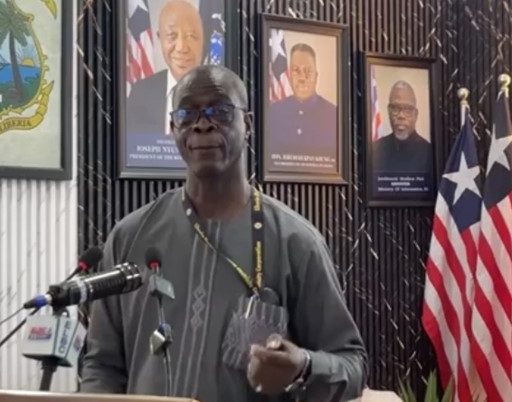
The disclosure was made Tuesday by Hon. Thomas Zailee Gonkerwon, Deputy Managing Director for Operations at LEC, during the regular press briefing of the Ministry of Information, Cultural Affairs and Tourism (MICAT), where he outlined the corporation’s preparations for the approaching dry season and ongoing efforts to strengthen Liberia’s domestic electricity generation capacity.
Responding to a question about the nature of the disruption, the volume of electricity lost, and when normal supply could be restored, Gonkerwon explained that the problem originated from a major transmission substation to which the electricity transmission lines are connected.
He said LEC was maintaining contact with its Ivorian counterparts, who were conducting diagnostic assessments and working to resolve the problem. According to him, technical tests conducted around 5:30 a.m. and again before 11:00 a.m. Tuesday indicated that efforts to identify and address the fault were progressing.
Although he did not provide a definite restoration date, Gonkerwon expressed optimism that the disruption would be resolved in the shortest possible time. “In terms of energy loss, we are missing around 60 megawatts of supply that should come into us,” he disclosed, underscoring the significance of the interruption to Liberia’s electricity supply.
DRY SEASON SQUEEZE ON MT. COFFEE
The disruption comes at a particularly sensitive period as LEC prepares for the dry season, when declining water levels at the Mt. Coffee Hydropower Plant traditionally reduce domestic electricity generation at a time when national demand continues to increase.
Gonkerwon disclosed that electricity demand on the national grid currently fluctuates between approximately 160MW and 190MW, while the installed generation capacity of Mt. Coffee stands at 80MW. However, he explained that the plant’s output diminishes during the dry season because of limited water availability in the reservoir.
This seasonal reduction, he noted, makes it necessary for LEC to strengthen alternative generation sources and rely on imported electricity or costly thermal power plants to bridge the supply gap.
To mitigate the anticipated shortfall, Gonkerwon said LEC was maximizing available domestic generation, including its 20MW solar facility and a 38MW thermal plant, while undertaking extensive maintenance on some facilities ahead of the dry season. He further disclosed plans to install an additional 10MW of solar capacity supported by a 12-megawatt-hour battery storage system to help sustain electricity supply.
INFRASTRUCTURE AGREEMENT AWAITS LEGISLATIVE RATIFICATION
Despite the immediate disruption to regional imports, the LEC official maintained that the corporation was pursuing both short-term interventions and long-term investments intended to reduce Liberia’s dependence on expensive electricity imports. Central to that strategy is the proposed Master Infrastructure Development Agreement involving the Government of Liberia and LEC, which Gonkerwon said is subject to legislative consideration and ratification.
The proposed initiative is expected to expand hydroelectric generation through additional water-storage infrastructure, new power generation facilities, transmission lines, and substations designed to improve the distribution of electricity across the country. He explained that the water-storage component would address one of the country’s longstanding structural challenges in electricity generation: the inability of run-of-river hydropower facilities to maintain consistent production during periods of reduced rainfall. Under the proposed arrangement, the reservoir infrastructure would allow water to be stored and released gradually, creating the possibility of generating electricity throughout the year rather than depending heavily on seasonal river levels.
Gonkerwon said the proposed investment forms part of a broader plan to introduce approximately 270MW of additional generation capacity through four new power plants, which could significantly improve the country’s ability to meet growing domestic demand. He also highlighted the need to expand the transmission network to accommodate additional generation, noting that approximately 150 kilometers of transmission lines are proposed to connect the new facilities to the existing grid. The expansion would require upgrades to the Mt. Coffee substation and other substations within the Monrovia electricity network, alongside additional transmission infrastructure toward Nimba County to improve access and distribution in other parts of the country.
However, he cautioned that hydroelectric infrastructure projects require considerable time to complete, with construction generally taking between three and five years. As such, the proposed investments would not provide an immediate solution to the current electricity deficit.
DEVELOPMENT PARTNERS REMAIN ON COURSE
Beyond the proposed agreement, Gonkerwon said ongoing electricity projects supported by development partners remain on course and are expected to complement the government’s broader energy expansion agenda. He identified the World Bank’s support for the Mt. Coffee expansion and the development of additional hydropower infrastructure, alongside the involvement of the European Investment Bank and other partners in proposed energy projects under the National Compact, as important components of the country’s electricity development efforts. He also acknowledged continued support from the African Development Bank, the European Union, and other development partners.
POWER FOR JOBS AND INDUSTRY
On the economic implications of the proposed investments, Gonkerwon argued that improving electricity availability is essential to Liberia’s industrialization, entrepreneurship, job creation, and overall economic development. He said dependable electricity would enable businesses to expand production, encourage investment, support public institutions, and create opportunities for Liberians to benefit from the country’s natural resources through local processing and value addition.
He further emphasized the importance of developing local technical capacity, noting that LEC’s approach to major energy projects includes training Liberians to acquire the skills needed to operate and maintain newly constructed facilities. As an example, he pointed to the Mt. Coffee Hydropower Plant, which he said is currently operated and maintained by Liberian personnel who have received specialized training.
OVERSIGHT AND OWNERSHIP OF ASSETS
On project oversight, Gonkerwon disclosed that LEC has established a dedicated Project Implementation Unit, while an independent engineering firm is expected to review designs, supervise construction, and oversee commissioning and acceptance of the proposed infrastructure. He also reaffirmed that the corporation would retain ownership and operational responsibility for the assets resulting from the proposed agreement.
SEARCH FOR REGIONAL ALTERNATIVES
Meanwhile, acknowledging the challenges posed by the approaching dry season and the temporary disruption in imported electricity, Gonkerwon said LEC was continuing to maximize domestic generation while pursuing alternative regional electricity supplies. He disclosed that LEC Managing Director Mohammed Sheriff was engaged in high-level discussions with Côte d’Ivoire’s energy authorities and was expected to continue engagements with Électricité de Guinée (EDG), Guinea’s electricity utility, as part of efforts to strengthen regional power arrangements.
Gonkerwon maintained that regional electricity imports would remain necessary until Liberia develops sufficient domestic generation capacity to meet its growing demand. He stressed that the country’s long-term objective must be energy sovereignty, arguing that Liberia needs a reliable, year-round electricity supply capable of supporting industrialization and reducing its dependence on costly external sources.
As the country approaches another dry season, the immediate challenge remains restoring the approximately 60MW currently unavailable from Côte d’Ivoire while ensuring that domestic generation and other regional supply arrangements are sufficient to prevent further pressure on the national grid. For now, however, LEC has not announced a definite timeline for the restoration of the interrupted Ivorian supply, leaving the corporation dependent on ongoing technical engagements and alternative generation arrangements as efforts to resolve the transmission problem continue.
Comments are closed.