

Boakai Demands People’s Budget -Wants Youth, Motorcyclists, Boy Scouts Budgeted
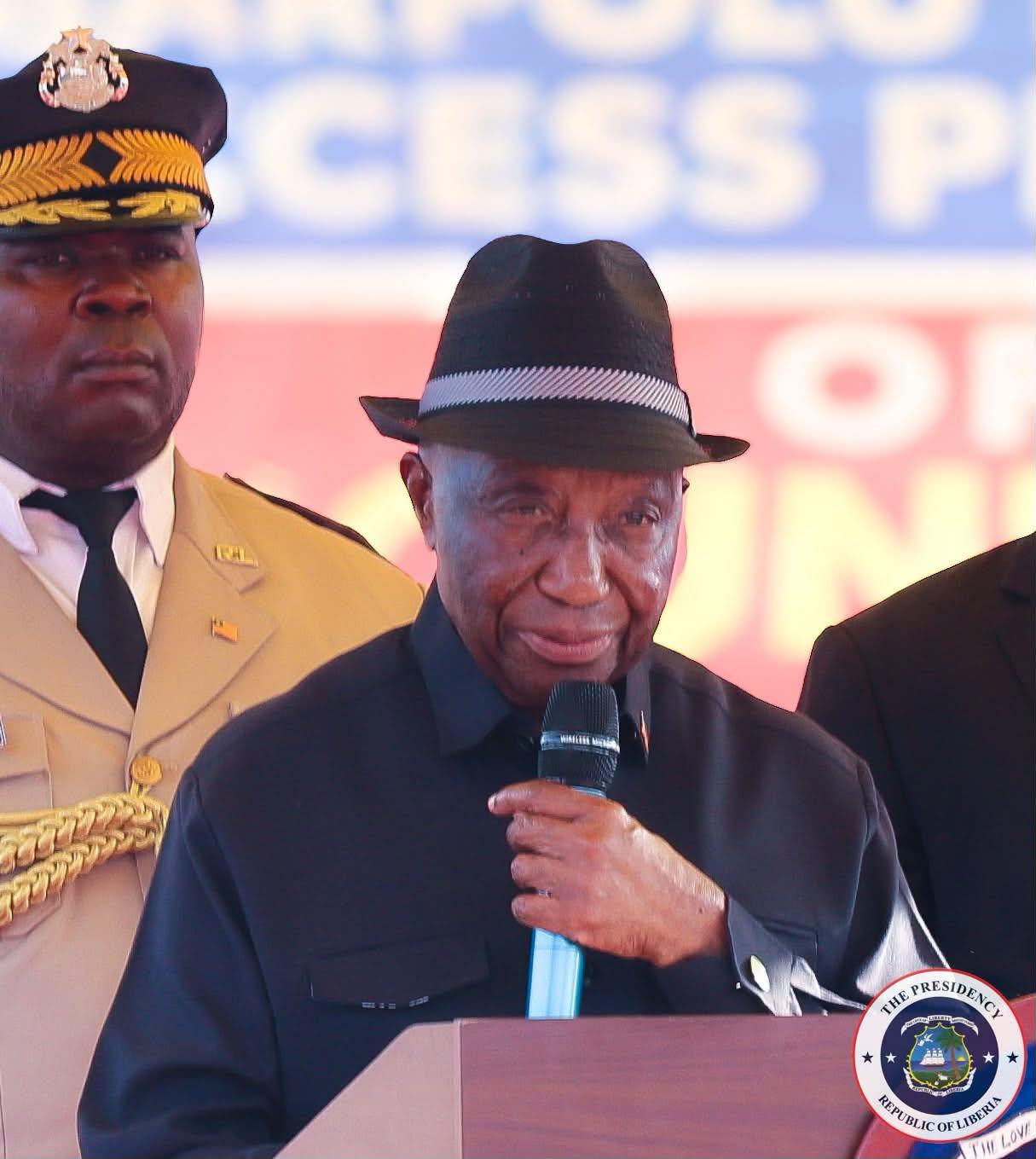
MONROVIA – President Joseph Nyuma Boakai Sr. has set a test his own government must now pass. At the 26th Cabinet Meeting, he declared that the budget “has to show on the people.” He named youth groups, commercial motorcycle riders and the Boy Scouts as newly factored beneficiaries. By his own account, these groups were previously overlooked. Boakai also repeated his mantra of performance and record-keeping. That emphasis suggests the administration knows accountability remains its weak flank. He blamed inherited laws and structural backlogs for some hurdles. Yet he told ministers to treat challenges as tasks, not grounds for complaint. Citizens will judge this budget by what reaches their tables and pockets, as THE ANALYST reports.
Presiding over the 26th Cabinet Meeting at the Executive Mansion under the theme “Building on economic growth, investing in livelihoods and empowering the next generation,” President Joseph Nyuma Boakai Sr. has underscored that the national budget must directly impact the lives of ordinary citizens and faithfully align with the government’s development framework.
Addressing his ministers and heads of agencies, Boakai commended the collective efforts of public officials in driving positive developments across the country, noting that public recognition belongs to the entire administration’s teamwork. However, he cautioned against complacency, pointing out that the government is actively correcting historical structural backlogs and burdensome legal frameworks inherited from the past.
A Budget That Touches the People
A central focus of the President’s address was the national budget and the performance of revenue-generating institutions. Expressing satisfaction over positive improvements in domestic revenue collection, Boakai lauded the Ministry of Finance and Development Planning (MFDP) and associated revenue agencies for working diligently to craft a more inclusive fiscal package.
“The national budget is for public welfare. It is important to make the budget the people’s budget, and it has to show on the people; so the budget must be inclusive this time,” Boakai stated.
The President highlighted that for the first time, previously overlooked segments of society, such as youth groups, commercial motorcycle riders, and dormant civic institutions like the Boy Scouts, have been factored into the budgetary allocation to ensure that marginalized populations feel a sense of belonging and responsibility within the state.
Uncompromising Stance on Performance, Accountability
Reiterating his zero-tolerance approach to laxity, Boakai placed heavy emphasis on operational efficiency, issuing a clear reminder that public service demands transparency and rigorous record-keeping.
“The thing we continue to talk about in government is performance, performance, performance, and not just performance, but records for accountability. We all have to know that we work for the public, our job is to make sure we keep records, and that we account to the people,” the President emphasized.
He noted that while inherited laws and systemic arrangements often pose hurdles, his administration accepted the mandate to do the hard work of rebuilding, urging cabinet members to view challenges not as grounds for complaint, but as tasks to be solved.
Economic Resilience, Food Security, Agriculture
Touching on broader economic stability, Boakai acknowledged global economic challenges but expressed relief that prudent fiscal management has shielded the country from severe disruptions, ensuring that essential commodities like rice remain affordable and available, and preventing fuel shortages.
Looking forward to sustainable economic growth, the President issued a strong call to open up the economy and scale up production, particularly through the agriculture sector. With the introduction of new farming equipment and a departure from traditional subsistence methods, he urged the Ministry of Agriculture (MOA) and relevant stakeholders to position the nation for robust food production and long-term economic resilience.
Concluding the session, Boakai praised the regularity and effectiveness of the cabinet meetings as a vital decision-making engine for the government, encouraging continued collaboration, knowledge sharing, and unwavering dedication to the realization of the ARREST (Agriculture, Roads, Rule of Law, Education, Sanitation, and Tourism) Agenda for Inclusive Development.
Housing, Youth Pathways on Agenda
Earlier, before turning the meeting over to Boakai to preside over it, the Director of Cabinet, Nathaniel Kwabo, stated that there were two key issues on the agenda for deliberation and named them as the report from the committee on the government employees housing initiative framework, headed by the Director General of the Civil Service Agency (CSA), Dr. Josiah Joekai, and the presentation of the Pathways for Youth Empowerment and Development, to be presented by the Minister of Youth and Sports, Atty. Cornelia Kruah.
He also used the occasion to introduce the newly appointed Minister of National Defense, Cllr. Oswald N. Tweh, who had previously served as Minister of Justice and Attorney General.
Comments are closed.