

Bility Warns Against Bigotry CMC Leader Decries Tribal, Religious Gatekeeping
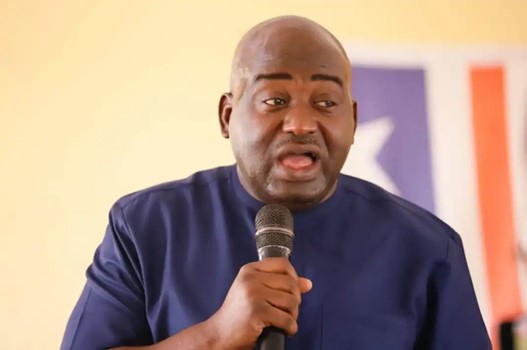
MONROVIA – Musa Hassan Bility has named a fault line most politicians prefer to whisper about. Three years before the 2029 elections, the CMC leader warns of a creeping danger. Tribe and religion, he says, are being smuggled into leadership decisions. His own experience gives the warning weight. He says identity was used against his 2024 Deputy Speakership and 2025 Speakership bids. Yet he declines to brand every opponent a bigot. His answer cuts both ways. A Mandingo and a Muslim will be on the ballot, he says, but neither deserves the presidency by identity alone. In a country scarred by ethnic war, pundits say, that that distinction will test every campaign and every party. THE ANALYST reports.
The Political Leader of the Citizens Movement for Change (CMC), Representative Musa Hassan Bility, has warned against the growing use of ethnic and religious identity in Liberia’s political space, cautioning that playing with sectarian divisions risks unraveling the nation’s fragile post-war peace. Bility also declared that a Mandingo and a Muslim will be on the ballot in the 2029 general elections.
Writing in his syndicated column, “Letter from Saclepea,” under the title “When Tribalism and Religious Bigotry Return to Our Politics,” the Nimba County District #7 lawmaker decried efforts within political circles to introduce religion and tribal identity into decisions about who should or should not lead Liberia. He described the trend as “deeply troubling.”
“Liberian Muslims are increasingly and more visibly interested in politics, including those who may aspire to the highest offices in our country. And why shouldn’t they be? Are they not Liberians?” Bility asked. “Do they not pay taxes, raise families, build businesses, serve in government, and contribute to the development of this country? Have they not endured the same wars, poverty, and failures of leadership as every other Liberian?”
Bility noted that Liberia’s Muslim community represents a significant part of the population and, throughout the country’s democratic history, has supported presidents and candidates of different religious and ethnic backgrounds. “Why should a Mandingo seeking the presidency be treated differently from a Kpelle, Gio, Mano, Bassa, Kru, Grebo, or any other Liberian? This is not only dangerous; it is an insult to the very idea of Liberia,” he wrote.
Identity Politics on Capitol Hill
Drawing on his own experience in the Legislature, the CMC leader disclosed that during the 2024 Deputy Speakership election and the 2025 Speakership contest, he became aware of efforts to discourage support for his candidacy because of his tribal and religious identity. “I understood the calculations and knew that, for some, my ideas, qualifications, convictions, and commitment to institutional reform mattered less than where I came from and how I worshipped God,” Bility wrote.
“I remain convinced that the reform agenda we advanced could have strengthened legislative accountability, improved transparency, and saved the Liberian people millions of dollars. Instead, we continue to struggle with institutional dysfunction,” he added. Bility, however, stressed that he does not suggest that everyone who opposed him did so because of his identity, noting that political competition is legitimate but that democracy itself becomes the victim when tribal and religious considerations become instruments of political exclusion.
‘Poverty Has No Tribe’
Addressing the conditions of ordinary citizens, Bility argued that identity politics distracts from the battles Liberians should be fighting, and warned leaders not to “hide corruption, incompetence, weak leadership, and failed governance behind religious prejudice.” “Look around Liberia. Our children are dying from preventable diseases. Our mothers continue to die during childbirth. Our young women and girls remain vulnerable to rape and sexual violence. Our young people face unemployment, hopelessness, and the growing dangers of drugs,” he stated.
“Our communities lack decent schools, functioning hospitals, safe drinking water, electricity, and roads. These are the battles we should be fighting, not whether someone is Muslim or Christian, Mandingo or Kpelle. What does the religion of a president matter to a mother who cannot afford treatment for her dying child? Poverty has no tribe. Hunger has no religion,” Bility wrote.
Framework for 2029
Looking ahead to the 2029 presidential contest, Bility declared that candidates of every ethnic and religious background will run without apology. “In 2029, a Mandingo candidate will be on the presidential ballot. A Muslim will seek the presidency alongside candidates from other religious and ethnic backgrounds. No Liberian should apologize for seeking the leadership of the country of their birth, and no citizen should be rejected simply because of their tribe or religion,” he declared.
However, Bility balanced his message by warning against replacing religious exclusion with religious entitlement, stressing that belonging to a particular group confers neither automatic disqualification nor a special right to govern.
“Being Muslim does not make anyone a better leader, just as being Christian does not make anyone more qualified. Being Mandingo does not make anyone more competent than being Kpelle, Gio, Mano, or Bassa. A corrupt Muslim is no better than a corrupt Christian, and an incompetent Mandingo is no better than an incompetent person from any other tribe. Every candidate must face the same scrutiny,” he noted.
Charge to Muslim Youth
Addressing young people, particularly young Liberian Muslims facing growing identity-based rhetoric, Bility urged them to remain disciplined and avoid angry or confrontational reactions that provocateurs could use to stereotype or isolate them. “Do not fall into the trap.
Some would welcome an angry or confrontational response because it serves the very narrative they are trying to create. This is your country, and your citizenship is not a favor granted by another tribe or religious community. It is your birthright,” he wrote.
Closing with a direct warning to those in government, political parties and positions of influence who may be tempted to exploit religious and tribal differences for political advantage, Bility reminded the nation of the horrors of its past conflicts.
“You are playing with something far more dangerous than an election. You are playing with Liberia’s peace. Prejudices whispered in political meetings can become the hostility we see openly in our communities. The divisions cultivated to defeat one political opponent can eventually consume an entire country. No election is worth that price,” Bility wrote. The full text of the Letter from Saclepea appears on page 3 of this edition.
Comments are closed.