
CDC-Hosted Roundtable Sets Committee -Parties To Reconvene In Two Weeks
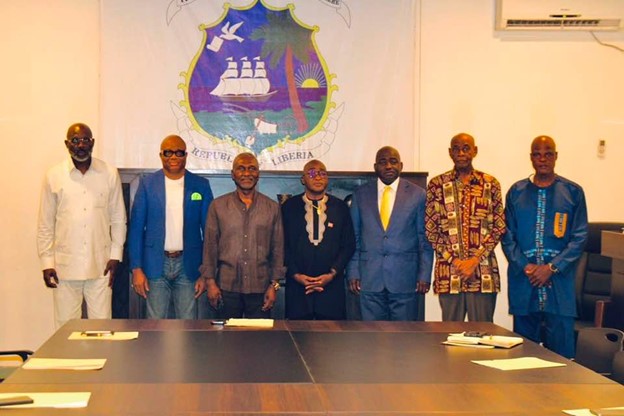
MONRPOVIA – Liberia’s fractured opposition has taken another cautious step toward unity. Sunday’s roundtable was hosted by the Congress for Democratic Change and presided over by former President George Weah. It produced a steering committee rather than an alliance. That modest outcome is telling. The parties agreed only to design a framework for future cooperation. They stopped well short of a joint 2029 ticket. History explains the caution: earlier pacts in 2016 and the Collaborating Political Parties (CPP) both collapsed under competing ambitions. The deeper question is whether these leaders can subordinate personal interest to a collective agenda. For an opposition seeking to challenge the ruling Unity Party, the answer will shape 2029. THE ANALYST.
The opposition roundtable hosted by the Congress for Democratic Change (CDC) has ended with political leaders agreeing to establish a steering committee that will develop a framework for how participating political parties will work together going forward. The decision was reached Sunday, September 6, 2026, at the Jamaica Resort in Thinker’s Village, Paynesville, where political leaders gathered for discussions aimed at exploring greater cooperation among opposition political forces.
The steering committee will be composed of two representatives from each of the political parties participating in the process. Its mandate is to develop a framework document that will define the nature, structure and principles of the parties’ collaboration, including how they will collectively engage on national political issues.
The framework is not an electoral alliance or a 2029 presidential ticket. Rather, it is intended to establish the basis for political cooperation among the parties and determine how that cooperation will be organized going forward. The political parties are expected to reconvene in two weeks to continue discussions and review progress on the framework being developed by the steering committee.
Weah Presides Over Roundtable
The roundtable was hosted by the CDC and presided over by its Political Leader and former President George Weah. Among the notable political leaders attending were Alternative National Congress (ANC) Political Leader Alexander Cummings; Citizens Movement for Change (CMC) Political Leader Musa Hassan Bility; Movement for Progressive Change (MPC) Political Leader Simeon Freeman; and Movement for Economic Empowerment (MOVEE) Political Leader and former Foreign Affairs Minister Dee-Maxwell Saah Kemayah. The All Liberian Party (ALP), led by businessman Benoni Urey, also sent a representative. Several senior CDC officials also attended, including former Speaker of the House of Representatives J. Alex Tyler, former Speaker of the 54th National Legislature Bhofal Chambers, Senator Nathaniel Mcgill, Former Finance Minister Samuel D. Tweah, CDC Chairman Janga Kowo and other party officials.
Echoes Of Past Failures
Sunday’s decision represents another attempt by Liberia’s political opposition to find common ground through collective action. The latest initiative comes against the backdrop of previous opposition collaborations that ultimately failed to produce lasting unity.
In 2016, opposition leaders gathered in Ganta, Nimba County, and reached an agreement aimed at working together ahead of the 2017 elections. That effort, however, did not result in a lasting political alliance.
Three years later, another major attempt was made with the formation of the Collaborating Political Parties (CPP), involving the Unity Party (UP), the ANC, the ALP and the Liberty Party (LP). The CPP eventually secured a common political platform, but internal disagreements and competing political interests later weakened the collaboration and led to its collapse.
A Familiar Question
The latest roundtable therefore raises a familiar question: can Liberia’s opposition forces sustain their current efforts at collaboration where previous attempts failed? That outcome could depend largely on whether the participating parties and their leaders are willing to put aside individual political ambitions and interests in favor of a broader collective agenda.
For now, the creation of the steering committee marks the first concrete step from Sunday’s roundtable, with the committee expected to begin work on the framework that will determine the future direction of the political collaboration. The parties’ decision to reconvene in two weeks is expected to provide the next opportunity to assess progress and further shape the proposed framework for their cooperation.
Comments are closed.