
Liberia Studies Rwanda Model -OWECC-L Looks to Rwanda, Delegation studies genocide justice
MONROVIA – Liberia’s long and often contentious march toward accountability for its civil war atrocities has entered a new phase of practical preparation, with the office charged with establishing the country’s war and economic crimes court turning to Africa’s most closely studied post-conflict justice system for guidance. Rwanda’s blend of conventional courts, community-based Gacaca tribunals, and institutional reform prosecuted those responsible for the 1994 genocide while rebuilding public confidence in state institutions—an experience Liberian officials believe holds direct lessons for a nation whose own conflicts claimed an estimated 250,000 lives. That conviction has now taken the head of the Office for the Establishment of the War and Economic Crimes Court to Kigali. THE ANALYST reports.
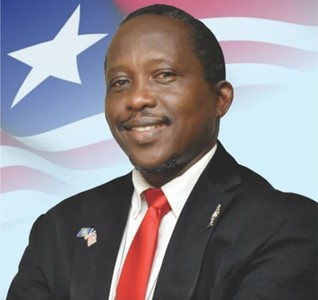
In a significant step toward advancing Liberia’s transitional justice agenda, the Executive Director of the Office for the Establishment of the War and Economic Crimes Court for Liberia (OWECC-L), Dr. Cllr. Jallah A. Barbu, is leading a five-member Liberian delegation to Rwanda on a high-level study and engagement mission.
The visit is intended to deepen Liberia’s understanding of Rwanda’s experience in establishing judicial mechanisms that prosecuted individuals responsible for the 1994 genocide and other crimes against humanity, while exploring institutional and legal approaches that could inform the establishment of a War and Economic Crimes Court in Liberia.
Organized through the collaborative efforts of Liberia’s Ministry of Foreign Affairs and the Ministry of Justice, the mission underscores the government’s continued efforts to pursue accountability for atrocities committed during Liberia’s civil conflicts while strengthening the country’s justice system.
Learning from Rwanda’s Experience
Rwanda has earned international recognition for its multifaceted approach to transitional justice following the 1994 Genocide against the Tutsi, combining conventional courts, community-based Gacaca courts, institutional reforms, and reconciliation initiatives to prosecute perpetrators while rebuilding public confidence in state institutions.
For Liberia, whose civil wars claimed an estimated 250,000 lives and displaced nearly half the population, the visit provides an opportunity to examine how another African nation confronted widespread human rights abuses and balanced justice with national healing.
Officials say the experience could provide valuable guidance as Liberia works toward establishing a judicial mechanism capable of addressing war-related atrocities and serious economic crimes in accordance with international standards.
Engagement with International Partners
During their stay, the Liberian delegation will participate in two specialized symposia on transitional justice involving representatives of the Office of the United Nations High Commissioner for Human Rights (OHCHR), senior Rwandan government officials, legal experts, and transitional justice practitioners.
The discussions will focus on accountability mechanisms, victim participation, judicial independence, reparations, institutional reforms, and strategies for promoting national reconciliation after violent conflict.
The delegation will also meet Liberian students and members of the Liberian community residing in Rwanda and neighboring countries to discuss Liberia’s ongoing transitional justice process and encourage broader public engagement.
Broad-Based Representation
The delegation comprises Dr. Cllr. Jallah A. Barbu, Executive Director of OWECC-L; Atty. Vivian Neal, Head of Gender and Youth Development; Peter K. Sonyah, representing victims’ groups; and Edmond Karmei, Officer-in-Charge of OWECC-L’s Bomi County Regional Office, who previously studied in Rwanda.
The inclusion of representatives from victims’ organizations reflects OWECC-L’s commitment to ensuring that survivors remain central to discussions surrounding justice, accountability, and reconciliation.
Public Outreach and Institutional Development
OWECC-L said the study visit forms part of its broader public outreach and stakeholder engagement strategy designed to educate Liberians about its mandate and ongoing efforts toward establishing both a War and Economic Crimes Court and a National Anti-Corruption Court.
The office has in recent months intensified nationwide consultations with civil society organizations, traditional leaders, youth groups, women’s organizations, religious institutions, and local communities as it seeks to build public understanding and confidence in the proposed accountability mechanisms.
“Valuable Lessons” for Liberia
Dr. Barbu said Rwanda’s experience demonstrates how countries emerging from conflict can strengthen the rule of law through credible judicial institutions.
“Rwanda, which has confronted the legacy of mass atrocities through judicial and institutional reforms, will help inform Liberia’s own transitional justice process as the country continues efforts to address past human rights violations and strengthen the rule of law,” he said.
A Defining Moment for Transitional Justice
The Rwanda mission comes as Liberia continues to debate the establishment of a War and Economic Crimes Court—one of the central recommendations of the country’s Truth and Reconciliation Commission (TRC).
While advocates argue that prosecuting those responsible for wartime atrocities is essential to ending decades of impunity and delivering justice to victims, others have raised concerns about the political, legal, and financial implications of such a court.
Supporters maintain that studying successful accountability models such as Rwanda’s could help Liberia avoid potential pitfalls and develop a judicial framework that reflects international best practices while remaining responsive to the country’s unique historical and political realities.
The outcome of the study mission is expected to contribute to ongoing policy discussions and institutional planning as Liberia moves closer to determining the structure, mandate, and operational framework of its proposed court—a process many observers believe will shape the country’s pursuit of justice and national reconciliation for years to come.
Comments are closed.