
Min. Piah Defends Boakai Drug Investigation Strategy
MONROVIA: Information Minister Jerolinmek Matthew Piah has mounted the Boakai administration’s strongest defense yet of the ongoing investigation into the multi-million-dollar cocaine seizure at Roberts International Airport, urging the public to allow security institutions to complete their work without political interference. The intervention comes amid growing skepticism over whether authorities will identify and prosecute those responsible for one of Liberia’s largest narcotics cases. By emphasizing convictions already secured under the current administration and highlighting international cooperation surrounding the investigation, the government is attempting to reassure citizens that the process will differ from previous failed prosecutions. The debate now centers on transparency, credibility, and institutional trust. As THE ANALYST’S GEORGE C. FLOMO Reports,
Information Minister Jerolinmek Matthew Piah has mounted a robust defense of the Boakai administration’s handling of major drug-related investigations, insisting that Liberia’s current security institutions will not repeat what he described as the failures and political manipulations that characterized previous high-profile narcotics cases.
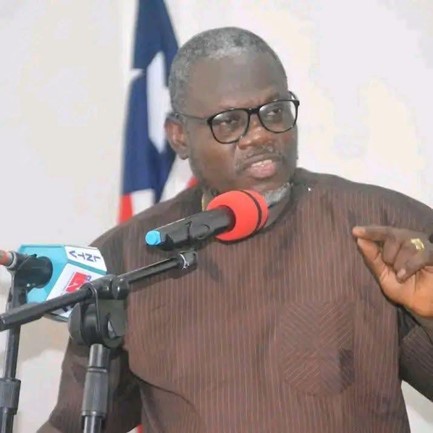
Speaking Tuesday during the Ministry of Information, Cultural Affairs and Tourism’s regular press briefing, Minister Piah delivered one of the government’s strongest responses yet to public skepticism surrounding the ongoing investigation into a multi-million-dollar drug seizure at Roberts International Airport (RIA).
He argued that law enforcement authorities must be allowed to complete their work without political interference or premature conclusions.
The minister’s remarks come amid heightened public debate over the handling of the recent seizure of narcotics reportedly valued at approximately US$19 million, a case that has attracted both local and international attention because of its transnational dimensions.
Piah began by drawing comparisons between the current situation and what he characterized as Liberia’s troubled experience with drug trafficking between 2018 and 2023.
According to him, that period witnessed some of the country’s most notorious narcotics scandals, including the controversial disappearance of substances linked to the so-called “US$100 million drug case” and another major incident involving an estimated US$30 million worth of narcotics.
Without naming specific individuals, the minister suggested that previous investigations failed because authorities allegedly targeted the wrong suspects while allowing principal actors to evade justice.
He argued that the inability to successfully prosecute those cases damaged public confidence and emboldened criminal networks operating within and beyond Liberia’s borders.
Evidence Before Politics
“The lesson from that period,” Piah implied, “is that investigations must be evidence-based and not driven by public pressure or political expediency.”
In defending the government’s anti-drug efforts, Piah pointed to conviction records secured under the current administration.
He disclosed that authorities secured approximately 15 convictions in drug-related cases during 2025, while an additional seven convictions have already been recorded in 2026.
According to him, those figures demonstrate that law enforcement agencies are not merely making arrests but are also successfully prosecuting offenders in court.
The minister said the government’s objective is to ensure that every case brought before the judiciary is supported by sufficient evidence capable of withstanding legal scrutiny.
He noted that this approach is intended to avoid a repeat of situations where high-profile arrests generated headlines but ultimately failed in court.
Let Professionals Handle Investigation
A significant portion of Piah’s remarks focused on what he described as growing attempts by politicians, commentators, and social media activists to dictate the direction of the ongoing investigation.
Using a series of analogies, he argued that just as people would not instruct trained engineers or mechanics on how to perform their duties, security professionals should similarly be allowed to conduct investigations without outside interference.
The minister maintained that agencies involved in the investigation possess the expertise necessary to determine culpability and that public pressure should not force investigators into making premature accusations.
He stressed that the government remains committed to ensuring that any individuals eventually charged are linked to the alleged crime through credible evidence.
According to him, investigators have no interest in producing “show cases” simply to satisfy public demand.
Piah repeatedly reminded journalists that the airport drug seizure is not solely a Liberian matter but a transnational criminal investigation involving international stakeholders.
International Dimension Highlighted
The minister emphasized that the narcotics intercepted at Roberts International Airport were reportedly destined for foreign markets and therefore fall within a broader framework of international law enforcement cooperation.
He noted that foreign partners, including agencies from countries potentially affected by the trafficking operation, are involved in aspects of the investigation.
Because of that international engagement, Piah argued that it would be extremely difficult for any local authority to manipulate or compromise the process.
He also disclosed that at least one foreign government, specifically the United States, has commended Liberia’s efforts in the matter.
According to him, that recognition reflects growing confidence in the country’s anti-narcotics enforcement mechanisms.
The Information Minister strongly criticized what he described as misinformation campaigns aimed at undermining confidence in state institutions.
Drawing comparisons to recent rumors concerning an alleged Ebola outbreak in Liberia, which health authorities later dismissed, Piah argued that some political actors continue to promote narratives unsupported by facts.
He accused critics of prematurely suggesting that the Liberia Drug Enforcement Agency and other security institutions have already compromised the investigation without presenting evidence to support such claims.
Government Promises Accountability
According to the minister, speculation risks eroding public trust in institutions attempting to address a serious national security concern.
Piah maintained that conclusions regarding responsibility for the drug shipment should be left to investigators and prosecutors rather than determined through public debate.
Despite defending the pace of the investigation, he assured the public that authorities remain committed to transparency and accountability.
The minister said the investigation is being supervised not only by the Liberia Drug Enforcement Agency (LDEA) but also by broader elements of Liberia’s national security architecture, including the Ministry of Justice, the Liberia National Police (LNP), and members of the National Security Council.
The involvement of multiple institutions, he argued, provides additional safeguards against misconduct or undue influence.
“When investigators identify those responsible and present evidence before the courts, the public will see that this process is fundamentally different from previous cases,” he suggested.
Broader Government Updates
Beyond the drug issue, Piah highlighted Liberia’s recent election as a non-permanent member of the United Nations Security Council, describing it as one of the country’s most important diplomatic achievements in recent years.
He disclosed that the government, through the Ministry of Foreign Affairs, will soon recruit at least 22 professionals to strengthen Liberia’s mission at the United Nations and support its responsibilities on the Security Council.
The minister said Liberia intends to play a meaningful role in representing African interests during its tenure and is preparing for a series of high-level engagements scheduled throughout the year.
He further revealed that President Joseph Nyuma Boakai is expected to preside over a Security Council session in December when Liberia assumes the council’s rotating presidency.
According to Piah, the development reflects growing international confidence in Liberia’s diplomatic capacity and offers an opportunity for the country to contribute to discussions on peace and security at the highest global level.
The minister’s comments portray an administration seeking to reassure the public that it can manage both domestic security challenges and expanding international responsibilities. While skepticism persists in some quarters regarding the handling of the airport drug seizure, government officials insist that the investigation must be allowed to proceed without political pressure, speculation, or interference.
Comments are closed.