
Jeety Rubber Project Gains Diplomatic Endorsement U.S. envoy praises Liberia’s industrial investment ambition
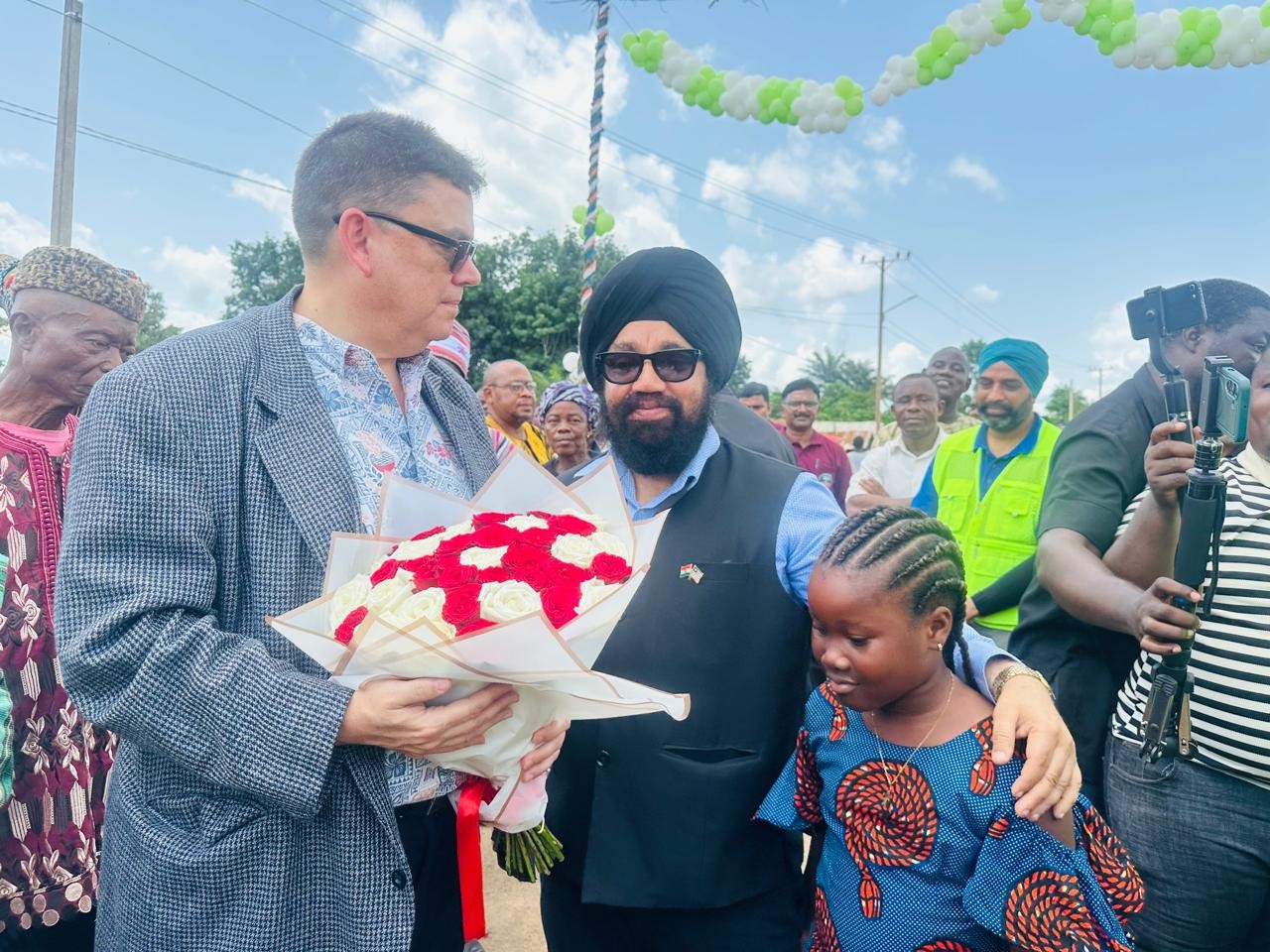
MONROVIA – Liberia’s long-standing struggle to transition from a raw commodity-exporting economy toward value-added industrial production received a potentially significant boost this week as senior United States diplomat Joseph Zadrozny publicly praised the Jeety Rubber LLC manufacturing initiative during a high-profile visit to the company’s operations outside Monrovia. The project, which seeks to establish Liberia’s first tire manufacturing plant while expanding domestic rubber processing capacity, is increasingly being viewed by government officials and economic observers as a symbolic test of whether Liberia can finally move beyond decades of exporting raw natural resources without substantial industrial transformation. Beyond the investment itself, the development also highlights growing international interest in Liberia’s manufacturing potential and broader economic diversification ambitions nationally. THE ANALYST reports.
Liberia’s efforts to reposition itself from a predominantly raw commodity-exporting economy into a more industrialized manufacturing destination gained fresh international visibility this week following a high-profile visit by senior United States diplomat Joseph Zadrozny to the Jeety Rubber LLC manufacturing project, where he praised the initiative as a potentially transformative investment capable of generating jobs, expanding industrial capacity, and restoring investor confidence within Liberia’s economy.
The U.S. diplomat also praised Jeety Rubber and its subsidiary, the Salala Rubber Corporation, for its model of private investment and community development in Weala, Margibi County.
In a remark during a visit to the companies’ operations in Margibi County, U.S. Charge d’Affaires Joseph Zadrozny described the companies’ achievements as a powerful example of how investment, community partnership, and ambition can change lives and strengthen Liberia’s economy.
“It takes not just an investor, not just his workers, but the whole community working together,” he said. “Being able to come out and see it work allows me to go back and talk about what’s really happening in Liberia.”
“I can encourage more investors, and I would really love to see more Liberian-American investors from the diaspora be encouraged to come back and invest here,” Mr. Zadrozny said.
According to the diplomat, the level of success he saw provides a strong basis for him and others to promote Liberia as a destination for more international business opportunities.
Mr. Zadrozny added that the breadth of Jeety Rubber and its subsidiary, Salala Rubber Corporation’s investment, which extends well beyond the factory floor, was central to its success.
While the U.S. envoy acknowledged that building a business in Liberia is demanding, he commended business tycoon Upjit Sachdeva for pursuing such “ambitious goals and following through on them.”
“I have been here now for close to a year, and I hear of plans and dreams the people want to see. But it’s really exciting to see what is actually being accomplished here in this area,” Mr. Zadrozny said.
“Whether the rubber is going to hit the road, but to see people not talking about what is going to happen in the future but what is being done right now in your communities, seeing the school, hospital, and other facilities being expanded, the factory, to seeing that rubber being produced,” the U.S. envoy said. “I’m very thrilled to see that much of that is being exported to the United States of America and transported to various factories to produce very quality products, and that starts right here in Liberia. Thank you very much for that.”
Jeety Rubber, a subsidiary of the Jeety Conglomerate, acquired the Salala Rubber Corporation, Liberia’s fourth-largest rubber producer, from Belgian-French agricultural conglomerate Socfin in August 2024, after the previous owner shuttered operations following violent workers’ protests over housing and healthcare conditions, leaving over 800 workers unemployed.
Under its new owner, the plantation has since resumed full operations, with business tycoon Upjit Singh Sachdeva (Jeety) describing the reopening as “a new chapter for SRC, the workers, and the entire country.”
The companies currently employ over 1,500 workers, including employees and contractors drawn from Weala and surrounding communities in Margibi County. Community investments by Jeety Rubber and SRC include the operation of nine deep-bore wells serving more than 6,000 people, an ongoing expansion of their 50-bed clinic to add four operating theaters and a dedicated eye clinic, a US$10,000 annual district scholarship fund, a daily feeding program, among others.
During his visit, Mr. Zadrozny toured the factory floor, a maternity ward and clinic, and school classrooms from early childhood through secondary education, including the science laboratory. The U.S. envoy noted that what he observed reinforced his view that the investment was succeeding because it extended beyond the factory gate.
“It takes not just an investor, not just his workers, but the whole community working together. I saw the birthing room at the hospital. I saw the early education classrooms, the higher school education, the science labs,” he said. “When you see a factory that is expanding, you need people who understand science and math people who can take the jobs that are going to be available. All of those steps matter.”
Mr. Zadrozny is just one of the many foreign envoys and ambassadors who have praised the impact of Jeety Rubber and its subsidiary. In February, Slovak Ambassador Martin Podstavek toured the companies, describing the companies’ investments as clear evidence of Liberia’s positive business climate and growing investment potential.
Similarly, Indian Ambassador Manoj Bihari Verma visited the facility in March 2025, praising Sachdeva for his efforts to improve SRC’s infrastructure, including schools, hospital facilities, and worker housing, and announced that his government would explore undergraduate scholarship opportunities for residents of Margibi County District Five.
The diplomatic attention comes as the companies have also been drawing formal recognition from within Liberia’s own agricultural sector. In late March, the Rubber Planters Association of Liberia (RPAL) and the Rubber Development Fund Incorporated (RDFI) honored Sachdeva at a ceremony marked by cultural symbolism, robing him in traditional Liberian attire and conferring upon him the Liberian name “Kolleh,” meaning “a bright and good man.”
The certificate, signed by RPAL President Wilhelmina Mulbah Siaway and RDFI Chairman J. Tokpah Mulbah, cited the company’s exceptional contributions to Liberia’s rubber sector and its unwavering support to smallholder farmers during a period of limited market access, when other buyers suspended rubber purchases in protest of the government’s regulated farm-gate pricing policy.
The association noted that Jeety Rubber continued purchasing rubber throughout the disruption, positioning the company as a critical market outlet for thousands of farmers who depend on rubber production for their livelihoods. The company has also extended interest-free loans to more than 100 farmers since 2025 to support farm replanting and expansion, with repayments structured through gradual deductions from future rubber sales.
In remarks earlier, Mr. Sachdeva noted that his long-term vision is to transform Liberia into a tire-producing country, noting that he has set his eyes on 2028 to produce the country’s first tires.
According to Mr. Sachdeva, the factory is currently producing five tons of processed rubber per hour, requiring between 200 to 225 tons of raw rubber daily to sustain operations. He noted that a major expansion project is underway to expand the factory’s production capacity to 550 tons per day.
“My target to complete the expansion is August, but I am keeping September open,” he explained, while also citing the ongoing Middle East conflict and disruptions in global shipping routes as additional concerns affecting operations and logistics.
Mr. Sachdeva used the occasion to issue a passionate appeal to Liberian rubber farmers, producers, and workers to support the initiative by ensuring a stable supply of raw rubber.
“If I can get that rubber, me and my family will make sure that the dream of every Liberian, a dream they have carried for over 100 years, will become reality in this factory,” he declared. “That dream is to produce made-in-Liberia tires by 2028. However, achieving the historic goal depends entirely on access to sufficient quantities of locally sourced rubber. If I cannot get the rubber, I will not be in a position to make tires.”
Comments are closed.