
Konneh Dissects Boakai’sThird SONA Performance-Weighs Promises Against Concrete Realities
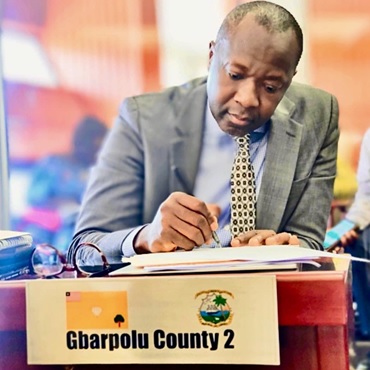
MONROVIA – Nearly halfway into President Joseph Nyuma Boakai’s six-year term, expectations surrounding governance, delivery, and economic relief have sharpened. Following the President’s third State of the Nation Address (SONA) delivered on January 26, 2026, Senator Amara M. Konneh—former Minister of Finance and a leading voice on economic policy—has offered a measured but candid assessment of where Liberia stands and what remains unresolved. Framing his analysis around performance versus promise, Senator Konneh evaluates progress made since the 2025 SONA, interrogates gaps in implementation, and outlines what must change if the administration’s ARREST Agenda for Inclusive Development is to translate into real relief for ordinary Liberians. His assessment blends acknowledgment with accountability. The Analyst reports.
Senator Amara M. Konneh has called for a sharper focus on implementation, accountability, and bread-and-butter outcomes following President Joseph Nyuma Boakai’s 2026 State of the Nation Address, warning that macroeconomic stability and ambitious plans will remain politically hollow unless they translate into tangible improvements in the daily lives of Liberians.
In a detailed post-SONA assessment, the Gbarpolu County Senator said the President’s third annual message reflected optimism and progress in selected sectors, but fell short of fully confronting the economic pressures shaping household realities, particularly high living costs, unemployment, sanitation challenges, and weak service delivery.
Konneh, a former Minister of Finance and Planning, framed his review around four core questions: what the President promised in the 2025 SONA, what was delivered in 2025, what is now being promised in 2026, and what concrete actions are required to address the “bread-and-butter” issues confronting citizens.
From Rescue to Development—Unfulfilled Shift
President Boakai entered 2025 promising a decisive shift from a rescue posture to a development-driven agenda, anchored in the ARREST framework and an $8.4 billion national plan. The administration pledged to make agriculture the backbone of the economy, accelerate road construction, expand electricity access, strengthen governance and the rule of law, and improve services across education, health, water, and sanitation.
According to Senator Konneh, while progress was recorded in some areas, 2025 ultimately became a year of missed opportunities.
“Agriculture funding was slashed and repurposed, Liberians remained spectators in their own economy, Monrovia stayed filthy, feeder roads deteriorated, and job creation failed to match the scale of unemployment,” he observed.
Food prices, he noted, declined marginally due to government interventions, but retail costs remain high, while domestic production showed no meaningful improvement. Most of the jobs reported by government, Konneh argued, were short-term or project-based, not sustainable private-sector employment capable of absorbing Liberia’s growing youth population.
Acknowledging the Bright Spots
Despite his critique, Konneh acknowledged notable gains that demonstrate what effective leadership and institutional focus can achieve.
Infrastructure projects advanced along key corridors, electricity access expanded through rural electrification and new connections, and water systems were restored or extended in several communities. He praised the Liberia Revenue Authority for strong revenue performance, citing improved compliance and administrative reforms under its leadership.
“These achievements matter,” Konneh said. “They show what is possible when institutions are properly led, focused, and resourced.”
He also highlighted improvements in foreign relations and diplomatic engagement, stressing that these gains must now translate into increased foreign direct investment, expanded trade, and job creation. Economic diplomacy, he argued, should become a central pillar of Liberia’s development strategy.
Donor Aid Shock and Its Aftershocks
The Senator expressed concern over the abrupt reduction in donor support during the second quarter of 2025, which the President cited as a major disruption to social and economic projects.
While government intervention prevented a complete collapse of essential services, Konneh argued that the deeper consequences of the aid shock were never adequately addressed.
“Thousands of jobs lost during that period were not restored. Stalled procurement contracts, including housing and community infrastructure, were not revived. Many communities and businesses have yet to recover,” he said.
These unresolved gaps, he added, continue to undermine confidence in the government’s capacity to deliver sustained economic relief.
Off-Budget Spending Raises Red Flags
From a public finance perspective, Konneh raised concerns about references to fully government-funded projects that do not appear in the national budget or follow established procurement procedures.
“When public projects are described as fully funded without appropriation or evidence of lawful procurement, it raises serious questions,” he warned, calling for immediate legislative scrutiny of any off-budget spending.
Such practices, he said, weaken transparency and erode fiscal discipline at a time when confidence in public financial management is essential.
Stability without Relief
Konneh agreed with the President’s assertion that macroeconomic stability improved in 2025. Inflation declined, foreign reserves increased, and revenue performance strengthened—achievements he credited to the economic team at the Ministry of Finance and the Central Bank.
However, he cautioned that macro stability alone does not equal economic relief.
“Until stability translates into lower food prices, affordable transport, jobs, clean water, and functioning services, its impact will remain distant from the lives of most Liberians,” he said.
ARREST Agenda: A Mixed Record
Assessing the ARREST Agenda’s performance, Konneh concluded that results fell far short of expectations in 2025.
Agriculture, he noted, received less than two percent of the national budget, with no measurable increase in domestic food production. Liberia remains heavily dependent on imports to feed its population.
Road development recorded incremental progress, including the ratification of the Pavifort Agreement and improved access to the Southeast, but no major corridors were completed, and feeder roads—particularly in Gbarpolu—remain in poor condition.
Governance reforms also lagged, with more than 20 percent of planned interventions not started and over one-third not reported on. Education and healthcare saw continued effort, but Liberia remains ranked 178 out of 191 countries on the Human Development Index, with schools lacking teachers and supplies and healthcare systems strained.
Sanitation and health services improved in select communities, but multidimensional poverty remains above 45 percent.
“Taken together,” Konneh said, “2025 was marked by high living costs, unemployment, poor sanitation, weak services, and slow implementation.”
Legislative Agenda: A Path to Correction
Looking ahead, Konneh welcomed the President’s 2026 legislative agenda, particularly proposals to establish a National Planning Commission and a National Road Authority.
Liberia’s current planning function within the Ministry of Finance and Development Planning, he said, is under-resourced and structurally weak, contributing to fragmented implementation and inconsistent follow-through.
“A strong planning institution is essential for disciplined budgeting and effective development management,” Konneh said, pledging to champion the proposed commission.
Similarly, he described the National Road Authority as critical to moving from ad hoc road interventions to a sustainable national system with clear mandates for construction, maintenance, and financing.
Jobs, Youth, and the Informal Economy
On job creation, Konneh welcomed initiatives such as the proposed Youth Bank but urged their integration into a coherent national employment strategy.
That strategy, he argued, must link agriculture, infrastructure, skills development, and private-sector growth—particularly the informal economy, where most Liberians work.
He also questioned the administration’s claim of creating 70,000 jobs in 2025, noting that official unemployment data suggest much of this figure likely reflects temporary or informal work.
“What matters is not the number of jobs claimed, but their quality and sustainability,” he said.
The Measure That Matters
In his concluding assessment, Senator Konneh emphasized that the true measure of national progress lies not in speeches or statistics, but in lived experience.
“The state of our nation will be stronger when children are no longer selling on Tubman Boulevard, when emergency patients are treated before being asked to pay, and when classrooms are staffed with qualified teachers,” he said.
As Liberia moves through 2026, Konneh called for discipline, transparency, and urgency, warning that government must not grow beyond the consent of the governed.
“The economy may have taken off, but there were turbulence and bumps through mid-term,” he said. “Now is the time to stabilize the flight and guide it safely to 2029.”
He pledged to continue working with the President and his colleagues—without compromising his independence—to ensure commitments made to the Liberian people are finally delivered.
Comments are closed.