

Tweah Critiques 2027 Budget -Says Unity Party squandering opportunity
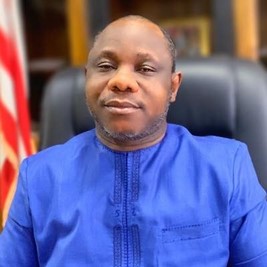
MONROVIA – Samuel D. Tweah, Jr. has entered the 2027 budget fight with numbers rather than slogans. The former finance minister benchmarks Liberia against seven African peers. His verdict is stark. Liberia trails the group average on every major indicator except debt service. The wage bill consumes 30.7 percent of the budget, against a 24.8 percent average. Tweah says the top 20 percent of earners take about 54 percent of public pay. He doubts the official capital figure, citing a US$33 million shift into goods and services. The critique carries partisan weight from a former CDC minister. His figures still demand official answers. As THE ANALYST reports, his three demands now sit squarely before the National Legislature.
As the National Legislature gears up for deliberations over the 2027 National Budget, former Minister of Finance and Development Planning Samuel D. Tweah has released a sweeping comparative fiscal analysis that challenges the economic trajectory of the current Unity Party (UP) administration.
Evaluating Liberia’s FY2026 budget composition against seven African peers – Ghana, Sierra Leone, Côte d’Ivoire, Botswana, Rwanda, Kenya, and Nigeria – in a social media post, Tweah contends that despite generating roughly US$785 million (L$143.15 billion) in additional domestic revenue since 2023, the government is squandering an opportunity for transformative economic impact.
“We can criticize the higher tax burden imposed on ordinary citizens,” Tweah wrote in his policy statement, “but this post wants to argue that something has to change with such increases for bigger impact.”
Liberia Trails African Peers
At the core of Tweah’s argument is a detailed cross-national benchmark examining how eight African states divide their national budgets across five critical indicators: total recurrent expenditure, employee compensation, goods and services, debt service, and capital investment.
According to data compiled from official finance ministries, budget statements, and International Monetary Fund (IMF) program documents for the 2026 fiscal cycle, Liberia performs worse than the eight-country average on every major indicator except debt service.
Liberia allocates 76.0% of its total budget to recurrent, non-capital spending, exceeding the regional average of 74.1%. Within this group, only Ghana (83.9%), Kenya (81.4%), and Botswana (77.5%) devote higher shares to recurrent costs, whereas high-growth economies such as Rwanda and Nigeria keep recurrent spending tightly constrained at 61.4% and 64.2%, respectively.
A closer inspection of recurrent expenditure, according to Tweah, reveals that Liberia’s public-sector wage bill is among the heaviest in the region. Compensation of employees consumes 30.7% of Liberia’s national budget, dwarfing the eight-country average of 24.8%.
Among the peer group, only Botswana records a higher proportion at 37.4%, placing Liberia ahead of Nigeria (28.4%), Sierra Leone (25.9%), and Ghana (25.4%), and at nearly double the wage shares of Rwanda (17.9%), Côte d’Ivoire (16.4%), and Kenya (16.2%). Simultaneously, Liberia spends 15.6% of its budget on goods and services, substantially above the 11.0% regional average. While Côte d’Ivoire edges higher at 16.9%, Liberia’s operational overhead stands in stark contrast to nations like Ghana (3.7%), Nigeria (5.0%), and Kenya (5.6%), which keep administrative goods and services tightly reined in.
Debt Service the Lone Bright Spot
Tweah stated that the lone bright spot in Liberia’s comparative fiscal profile is its debt service burden, which stands at 17.8% of the total budget for interest and principal repayments, well below the eight-country average of 28.6% and second only to Botswana’s 12.5%. However, Tweah cautions against complacency, pointing to Kenya’s crippling 53.5% debt service ratio, alongside elevated burdens in Côte d’Ivoire (38.5%) and Nigeria (30.8%), as a sobering warning.
“Overall, Liberia is struggling on all indicators except debt service since its burden is relatively still low,” he noted, adding that “this pressure is growing and current spending on projects have to deliver impact to avoid the Kenya debt situation.”
Wage Bill ‘Monstrously Unjust’
Beyond macroeconomic ratios, Tweah reserves his sharpest criticism for what he characterizes as deep-seated structural injustice within Liberia’s US$400 million public wage bill.
While domestic revenue has expanded by US$785 million since 2023, approximately US$100 million, or 12.3% of that new revenue, has been absorbed into employee compensation “in a way that does not address the key compensation challenge: closing the inequality gap.”
Citing an analysis of January 2024 Liberian wage data, Tweah demonstrates that the top 20% of government earners capture roughly 54% of all public compensation.
Tweah contends that, in practical terms for 2026, roughly 13,400 of the highest-paid government workers command more than US$210 million in annual salaries, leaving the remaining 53,600 government employees to divide just US$190 million.
Condemning the disparity in blunt terms, Tweah declared, “This is MONSTROUSLY UNJUST and must be addressed by both policy and politics.”
Capital Spending Figures Questioned
Equally contentious in Tweah’s assessment is the credibility of Liberia’s capital investment figures and the sharp ideological divide between the former Congress for Democratic Change (CDC) government and the current UP “Rescue Government.”
He maintains that although Liberia officially reports a 24.0% capital spending share – already trailing the eight-country average of 26% and far behind regional leaders Rwanda (38.6%) and Nigeria (35.8%) – a “thorough audit will show this is far less.”
To substantiate this claim, he points directly to pages 31 through 34 of the Annual Consolidated Budget Performance Report FY2025 (January 1–December 31), quoting its acknowledgment that “this outturn reflects a modest reallocation of resources from capital investment toward recurrent expenditure to address emerging fiscal and operational pressures during the year.”
According to Tweah’s analysis, roughly US$33 million was stripped from the Public Sector Investment Program (PSIP) and diverted into goods and services.
“This is why I do not trust the capital number in this analysis,” he explained, framing the shift as a fundamental philosophical contrast between the two administrations.
“Unity Party loves goods and services. CDC slashed goods and services to do PSIP,” Tweah asserted, arguing that the reallocation of development funds toward administrative overhead represents “one key fundamental difference between CDC and UP.”
Weaving political critique into his economic prescription, Tweah dismissed the current administration’s governance approach as disconnected from the daily struggles of ordinary citizens.
“The analysis has gone to show that the challenges of running Liberia go far beyond manipulating the judiciary to secure political indictments or convictions against dreaded opposition leaders and figures or using propaganda to convince suffering people they are not suffering—the so-called intellectualisation of poverty,” he stated.
Three Imperatives for the Legislature
To reverse these trends before the 2027 budget is finalized, Tweah lays out three concrete policy imperatives for the National Legislature. First, lawmakers must decisively cut allocations for goods and services to halt the drainage of development funds into bureaucratic overhead. Second, he urges legislators to “focus pay increases MAINLY among the lowest paid” to begin dismantling public-sector income inequality.
Third, he insists the Legislature must move “REAL AUDITED CAPITAL SPENDING toward the Rwandan and Nigerian total of around 35% to 37%,” warning that without productive capital investment, “Liberia will fall in the debt service trap of Kenya, since past loans that may not be yielding economic dividends as expected are still on our book.”
Concluding his intervention as “honest advice from a national patriot,” Tweah places responsibility squarely on lawmakers, declaring that “the poverty-reducing ball is now in the court of the National Legislature.”
Comments are closed.