

Snowe Proposes Seven-Point Agenda -Bomi Senator Wants Public Jury Hearings
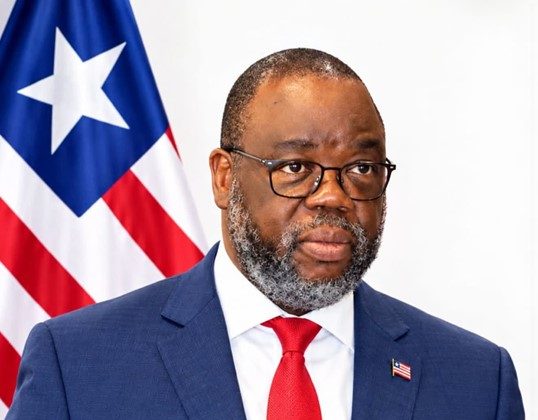
MONROVIA – The Senate’s resistance to abolishing jury trials now has a reform blueprint. Senator Edwin Melvin Snowe, Jr. has joined Senators Konneh, Dillon and McGill in rejecting Chief Justice Gbeisay’s proposal. His argument rests squarely on the Constitution’s own architecture. Articles 2, 21(h), 91 and 92 together place jury trials beyond the reach of statute or judicial directive. Snowe also exposes a quieter failure. Liberia already has an Office of Jury Management and anti-bribery provisions in the Judiciary Law. The unasked question is why neither has worked. His seven-point agenda moves the debate from abolition to enforcement and funding. It also asks the Legislature to share the blame for weak enforcement, as THE ANALYST reports.
Senator Edwin Melvin Snowe, Jr. of Bomi County has called for comprehensive jury reform rather than the abolition of jury trials, joining Senate colleagues who have rejected Chief Justice Yamie Quiqui Gbeisay, Sr.’s proposal.
Snowe, a former Speaker of the House of Representatives, said he was contributing to the national discussion from two decades of experience in the Legislature after reflecting on the arguments of Senators A. Darius Dillon, Sr., Amara Mohammed Konneh and Nathaniel F. McGill.
“Let me state clearly for the record: I am not a lawyer,” Snowe stated, adding that he is one of the 103 members of the Legislature entrusted with making laws and sworn to uphold the Constitution.
He said that responsibility requires lawmakers to examine proposals affecting fundamental rights with care, independence and sound judgment.
The Bomi senator said the concerns raised about jury trials deserve serious national attention and debate, free from partisan considerations and special interests.
He acknowledged that bribery, intimidation, interference and misconduct in the administration of justice threaten citizens’ rights and weaken public confidence in the courts, and said he respects the Chief Justice’s determination to confront those challenges.
However, Snowe argued that the nation must distinguish between the failure of individuals to discharge their responsibilities honestly and the value of the constitutional right itself.
“Liberia should undertake comprehensive jury reform while preserving the protections guaranteed by our Constitution. Corruption demands investigation, accountability, and institutional repair. Its existence does not, by itself, justify withdrawing a fundamental right from the Liberian people,” he declared.
The Constitutional Foundation
Snowe noted that Article 20(a) of the Constitution guarantees due process and the right to trial by jury, subject to its stated exceptions, while Article 21(h) specifically protects the accused’s right to a speedy, public and impartial jury trial in the cases it covers and permits an express waiver made with appropriate understanding.
He added that Article 2 establishes the Constitution’s supremacy over inconsistent laws and official actions, meaning that an ordinary statute or judicial directive cannot lawfully abolish constitutionally protected jury trials.
The senator drew a distinction between an accused person voluntarily waiving a jury trial and the State removing that choice from everyone.
“An individual waiver exercises a constitutional option. General abolition would take away the underlying right,” he explained.
Snowe said any proposal to remove these guarantees must follow the amendment process. Under Article 91, he noted, an amendment requires approval by two-thirds of the membership of each House, followed by ratification by two-thirds of registered voters voting in a referendum held no sooner than one year after legislative action, while Article 92 requires publication and explanation of proposed amendments, with separate voting where multiple amendments are submitted.
According to Snowe, these requirements ensure that fundamental changes receive careful consideration and the consent of the people whose rights are affected. “Our duty as lawmakers is to respect that process, regardless of the urgency or popularity of a proposal,” he stressed.
Abolition Leaves Risks Unresolved
Snowe argued that abolition would leave the underlying risks unresolved, because if the problem is improper influence over verdicts, removing jurors does not automatically remove that influence.
He noted that judges, prosecutors, investigators, court personnel and witnesses also require protection from bribery, intimidation and political pressure, and that transferring fact-finding entirely to a judge could concentrate the efforts of those seeking to manipulate outcomes.
“This is a concern about institutional safeguards, rather than an accusation against our judges,” the senator clarified.
He called for an examination of the entire chain of justice, from how crimes are investigated and evidence preserved to how witnesses are protected, cases prosecuted and trials managed, warning that a weakness at any stage can compromise the result.
Snowe also cautioned against treating every acquittal as proof of jury corruption. Referring to proceedings involving former Finance Minister Samuel Tweah and those involving Abdullah Kamara, which he described as two completely different scenarios, he said the public must distinguish among verdicts, allegations of misconduct, subsequent court rulings and the evidence supporting each.
“An acquittal may reflect insufficient evidence, unreliable testimony, or a failure to establish guilt,” Snowe said, adding that evidence of jury interference must be investigated and addressed through lawful procedures.
He insisted that “public frustration cannot become a substitute for proof, and political affiliation must never determine whose rights deserve protection.”
Strengthen Existing Jury Office
The Bomi senator urged Liberia to build on the institutions and laws already in place, noting that the country has an Office of Jury Management established through 2013 legislation that he proudly supported.
He said the office is responsible for jury selection, management of the central jury pool and education of prospective and selected jurors, and called for an assessment of how effectively it is fulfilling its mandate, the strengthening of its capacity and the correction of weaknesses in its operations.
Snowe pointed out that the Judiciary Law already prohibits jurors from accepting bribes or rewards intended to influence their duties and provides for criminal consequences upon conviction.
He noted that the response should begin by examining enforcement of those provisions and identifying gaps requiring legislative action, warning that passing another law will achieve little unless the responsible institutions have the resources, independence and commitment to enforce it.
Seven-Point Reform Agenda
Snowe proposed that the Legislature, in consultation with the Judiciary and other relevant institutions, consider a comprehensive jury reform program. Its first element is transparent selection and effective screening, through stronger jury lists, auditable random selection procedures and improved screening for conflicts of interest, bias and improper relationships, with both prosecution and defense retaining a fair opportunity to challenge unsuitable jurors.
The second is adequate compensation and conditions of service, including timely payment of juror allowances, safe accommodation where required, transport and proper meals, so that citizens can serve without avoidable financial hardship. Snowe stressed that better conditions must accompany firm accountability for misconduct.
Third, he called for protection proportionate to the risk, with clear procedures for reporting threats and improper approaches and effective arrangements for sequestration, controlled communications and protection of identifying information where justified, while safeguarding the accused’s ability to challenge bias and receive a fair trial.
Fourth, he urged credible investigation and prosecution of those who offer bribes, arrange improper contact, threaten jurors or otherwise corrupt proceedings, as well as jurors who participate, along with a review of existing offenses and penalties and due process for every person accused.
The fifth element is stronger juror education and judicial guidance on evaluating evidence, maintaining confidentiality, avoiding outside influence and reporting misconduct. Sixth, Snowe called for improved criminal investigation and case preparation, including stronger evidence collection, witness protection, prosecution and legal representation, noting that “a reliable jury system depends on reliable evidence and professionally presented cases.”
Finally, Snowe proposed funding and measurable accountability through a costed implementation plan, clear institutional responsibilities and periodic reporting to the relevant legislative committees, including those responsible for judiciary matters, appropriations and public accounts.
Such oversight, he said, should examine expenditure, delays, protection arrangements and the handling of misconduct complaints while respecting judicial independence and the confidentiality of jury deliberations.
A Shared Responsibility
Snowe described the jury as an important avenue for ordinary citizens to participate directly in the administration of justice, saying that preserving that role requires addressing its weaknesses.
He called for public hearings involving the Judiciary, the Ministry of Justice, the Liberian National Bar Association (LNBA), jury administrators, civil society and citizens with experience of jury service, to establish what is failing, what has already been attempted and which reforms can be implemented and funded.
“The Legislature must also accept its own responsibility. We cannot demand stronger courts while overlooking the resources and laws needed to support them,” Snowe said, adding that legislative oversight must be constructive, consistent and respectful of the separation of powers.
According to him he remains ready to work with the Chief Justice and his legislative colleagues on reforms that protect citizens, deter corruption and improve the delivery of justice.
“Let us protect the right, punish those who corrupt it, and give the system the support it needs to work,” the senator concluded. Snowe also chairs the Committee on Political Affairs, Peace, Security and the African Peer Review Mechanism of the Economic Community of West African States (ECOWAS) Parliament and heads the Liberian Delegation to that body.
Comments are closed.