
‘No Turning Back’ -Bility Pesters GoL, Says drug story will not sleep
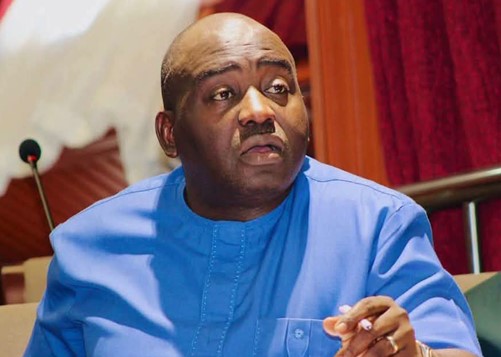
Nimba County lawmaker Musa Hassan Bility has warned that the US$19.2 million (L$3.5 billion) cocaine case is drifting toward national amnesia. In his latest Letter from Saclepea, the outspoken legislator accuses the Boakai administration of allowing grave matters to fade without accountability. He cites the Foya project’s unanswered procurement questions and a full week of official silence on the ongoing cocaine investigation. Bility warns that Liberia cannot condemn the former Weah government’s drug failures while excusing identical silence today. He demands regular public updates, aggressive pursuit of fugitive suspects, and full financial tracing of the entire trafficking network. His letter closes with a defiant pledge of sustained, unrelenting democratic vigilance. THE ANALYST reports.
Nimba County lawmaker Musa Hassan Bility has issued one of his sharpest warnings yet to the Boakai administration, declaring that the US$19.2 million (L$3.5 billion) cocaine case “will not go to bed” and vowing sustained public pressure until every suspect is brought to justice. In his latest Letter from Saclepea, released over the weekend, the outspoken legislator accused the government of repeating what he called “one of the saddest habits in Liberian public life”—making noise about serious issues for a few days, promising investigations, and then letting them go quietly.
“Too many serious matters have already been swept under the carpet by this government,” Bility wrote. He warned that the multimillion-dollar cocaine case now risks joining that troubling list of forgotten national scandals.
Foya Project Under Scrutiny
Bility pointed to the multimillion-dollar project in Foya as a standing example of unresolved public accountability. He recalled that some initially described the structure as a presidential villa costing an estimated US$10 million (L$1.8 billion), while the government later named it the Mano River Union (MRU) Center for Regional Peace and Development at an estimated cost of US$6.1 million (L$1.1 billion).
The lawmaker insisted that the Liberian people still deserve a complete accounting of the project. “Who provided the money? How much did each contributor provide? Who selected the contractors? What procurement process was followed? Who owns and controls the completed property?” he asked, adding that “a name is not an audit and a press briefing is not a complete accounting.”
He lamented that no prompt and comprehensive public report has come from the General Auditing Commission (GAC), the Liberia Anti-Corruption Commission (LACC), or the Asset Recovery and Property Retrieval Taskforce. In a poverty-stricken country where pregnant women go to bed hungry, children sit in overcrowded classrooms, and hospitals struggle without basic supplies, he argued, no multimillion-dollar public project should emerge without complete transparency.
Cocaine Case Going Cold?
Turning to the US$19.2 million cocaine seizure, which involved approximately 237.6 kilograms of the narcotic, Bility acknowledged that an investigation was announced and that several individuals and a company have been charged. But he cautioned that “charges written on paper are not the same as suspects being arrested and brought before the court,” noting that the only defendant publicly arraigned reportedly returned to Liberia and voluntarily surrendered while others remain beyond the physical reach of the justice system.
He decried another full week without a meaningful public update, citing no new arrests, no clear report on the search for those at large, and no explanation of where the drugs originated, who financed the operation, or who facilitated its activities.
The lawmaker further warned that the Legislature’s recess has severely reduced the opportunity for continuous public oversight unless extraordinary steps are taken, concluding bluntly: “We are not proceeding well.”
Bility maintained that investigative confidentiality and public accountability are not enemies, insisting that investigators can protect sensitive evidence while still providing regular and credible updates.
The public, he said, can be told whether warrants have been issued, whether international assistance has been requested, whether financial accounts and assets are being traced, and what progress is being made toward bringing every suspect before the court.
“One Standard for All”
Describing the drug crisis as “a threat to our children, our families, our national security, and Liberia’s international reputation,” Bility invoked a United Nations Population Fund (UNFPA) estimate that two in every ten Liberian youths were using narcotic substances before the current government took office.
He recalled that the drug crisis was used as a serious indictment of the George Weah administration, with the failed prosecution of the previous major cocaine case presented as evidence of incompetence, interference, and national decline.
“We cannot use one standard to condemn George Weah and another standard to protect Joseph Boakai,” he wrote. “What was described as a national emergency under the previous government cannot suddenly become a public relations inconvenience under this government.”
The Nimba lawmaker conceded that the government has asked for time and acknowledged that dismantling an international criminal network requires patience, evidence, cooperation, and due process. But he insisted that time must produce results, warning that “time cannot become an excuse for silence” and “patience cannot become permission for the matter to disappear.”
Promise of Democratic Vigilance
Bility pressed a battery of unanswered questions: Where did the drugs come from? Who financed the shipment? Who arranged its movement through Liberia? Who were the intended recipients? How did known persons of interest leave the country, and what is being done to return them?
“These are questions, not convictions, and the Liberian people have every right to ask them,” he stated.
Painting the human toll of the crisis, he said parents do not forget when they wake up to find their children under the influence of narcotics, when children leave school and begin living on the streets, or when families are forced to place loved ones in rehabilitation centers with uncertain futures. As long as these things continue, he declared, Liberia will not forget.
He demanded that the government change its approach, communicate regularly, pursue every suspect, follow the money, expose the entire network, and invite credible international assistance where necessary. No amount of public relations, partisan attacks, political distractions, or silence, he warned, will make the matter disappear.
“This is not a threat. It is a promise of democratic vigilance,” Bility concluded. “This drug story will not go to bed. It will not be forgotten. It will not rest until the Liberian people know the truth and everyone responsible is brought to justice. There is no turning back.”
Comments are closed.