

Mining Dialogue TargetsGovernance Gaps-National Conference Prep Gains Urgency, Stakeholders Seek Equity
MONROVIA – Liberia’s mining sector sits between promise and peril. For decades, vast deposits of iron ore, gold, diamonds, and other minerals have fueled national revenue while leaving many host communities questioning whether extraction truly delivers shared prosperity. As global scrutiny on resource governance intensifies and domestic expectations grow louder, policymakers are increasingly compelled to rethink how mineral wealth translates into sustainable development. The Ministry of Mines and Energy’s latest stakeholder dialogue in Arthington reflects a recognition that weak coordination among regulators, companies, and communities has deepened mistrust and slowed reform. The upcoming National Mining Conference therefore carries higher stakes: can Liberia convert mineral riches into lasting infrastructure, jobs, and inclusive growth? THE ANALYST reports.
The Ministry of Mines and Energy (MME) has intensified efforts to reform and strengthen governance in Liberia’s mining sector by convening a One-Day Pilot Stakeholders’ Dialogue aimed at bridging long-standing gaps between mineral rights, land rights, licensee obligations, and the roles and responsibilities of host communities.
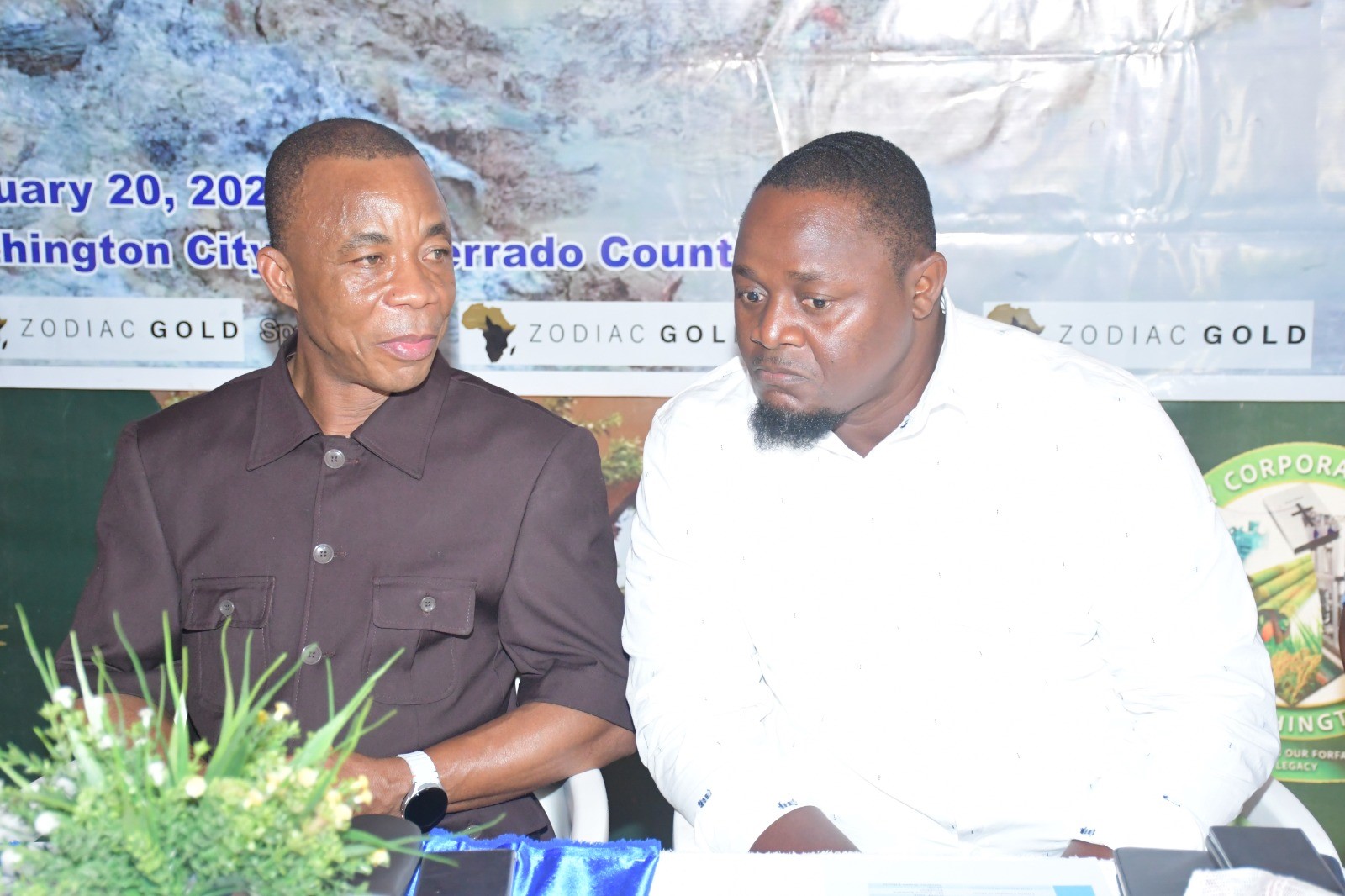
Held in Arthington City, Montserrado County, on Friday, February 20, 2026, the dialogue formed part of a build-up to the Ministry’s planned National Mining Conference on mineral and mining governance expected to be held this year (2026).
Bringing together local authorities, development partners, civil society organizations, and technical experts, the dialogue served as a platform for frank discussions on how Liberia can better manage its vast mineral resources while ensuring equitable benefits for communities and sustainable national development.
Participants examined how regulatory frameworks, environmental compliance, fiscal obligations, and social responsibilities intersect in practice—and where breakdowns often occur.
Providing an overview of the dialogue, Mines and Energy Ministry Deputy Minister for Operations William S. Hines framed the conversation around responsible resource management and long-term infrastructure development.
Deputy Minister Hines, speaking on behalf of the Minister of Mines and Energy, R. Matenokay Tingban, reminded participants drawn from mining communities in Arthington that mineral resources are non-renewable, stressing that the real measure of success lies in how revenues from mining are transformed into lasting national assets that benefit every Liberian citizen.
“These resources cannot be replenished,” Deputy Minister Hines noted, emphasizing that Liberia must deliberately channel mining proceeds into roads, hospitals, schools, and especially energy infrastructure that will continue to serve citizens long after mines cease operations.
He informed the people of Arthington City that without strategic reinvestment, the country risks repeating the cycle of extraction without sustainable transformation.
Deputy Minister Hines then highlighted Liberia’s energy costs as a critical barrier to industrial growth, pointing out that electricity tariffs in Liberia remain significantly higher than in some neighboring countries.
He observed that if Liberia is paying over twenty cents per kilowatt hour while countries like Ghana average closer to ten or eleven cents, investors seeking competitive manufacturing environments will naturally look elsewhere.
“If we want to attract factories and create jobs for our young population, we must become competitive,” he stressed, further noting: “When factories come, they create employment. When the mine closes, the factories remain. That is how we secure our future.”
The Deputy Minister emphasized that the mining sector must serve as a catalyst for broader economic diversification, including agro-processing, manufacturing, and value addition, rather than remaining solely export-oriented. He further underscored that deliberate infrastructure investments—particularly in energy, roads, and health systems—are essential to position Liberia within regional and global value chains.
Montserrado County Superintendent Whroway Bryant reechoed the comments of the Deputy Minister for Operations by embracing the importance of mining discussions being people-centered. Reflecting on Liberia’s mineral wealth—including gold, diamonds, iron ore, and other minerals—Superintendent Bryant observed that the country’s most important asset is often overlooked.
“We talk about gold, diamond, and other resources,” he said, “but we sometimes forget the people.”
Bryant explained that local government authorities, in collaboration with environmental and regulatory institutions, have a responsibility to ensure that mining companies operate within the confines of the law and environmental best practices.
In his special remarks, Superintendent Bryant emphasized that local leaders must serve as intermediaries between companies and communities to foster constructive relationships. According to the Montserrado Superintendent, sustainable mining depends not only on regulatory enforcement but also on mutual understanding and shared responsibility.
“Our job is to ensure that there is a relationship between the mining company and the people,” Bryant said, noting that when communities experience tangible development impacts—such as improved livelihoods, social services, and environmental protection—they are more likely to create a stable and enabling environment for investment.
He called for collaboration across ministries, agencies, and community leadership structures to ensure that mining activities translate into measurable improvements in living standards.
The dialogue also benefited from contributions by development partners and transparency advocates. Mr. Djomba Mara, Project Manager for Resource Governance in West Africa at the Deutsche Gesellschaft für Internationale Zusammenarbeit (GIZ) from Germany, reaffirmed the importance of regional cooperation and institutional strengthening in promoting responsible mineral governance.
Mr. Mara emphasized that effective resource management requires clear legal frameworks, transparency mechanisms, and community engagement strategies that align with international best practices.
Deputy Head of Secretariat of the Liberia Extractive Industries Transparency Initiative (LEITI), Zaza Quaqua, stressed the significance of transparency and public disclosure in building trust among citizens, companies, and government institutions.
Mr. Quaqua highlighted LEITI’s role in promoting revenue transparency and accountability within the extractive sector, stressing that improved information sharing can reduce misunderstandings and empower communities to make informed contributions to the mineral governance process.
Adding a social inclusion perspective to the Stakeholders’ Dialogue in Arthington on the weekend of February 20, 2026, Curtis V. Dorley, Deputy Minister for Research, Policy and Planning at the Ministry of Gender, Children and Social Protection, emphasized the need to integrate gender considerations and community welfare safeguards into mining governance structures.
Deputy Minister Dorley noted that extractive activities often have disproportionate impacts on vulnerable groups and that policy frameworks must deliberately account for social protection and equitable participation.
With over sixty percent of Liberia’s population under the age of thirty, the stakes are high. If effectively managed, the mining sector could serve as a foundation for economic diversification and social progress. If mismanaged, it risks perpetuating inequality and missed opportunities.
The Arthington dialogue represents an important step toward ensuring that Liberia’s mineral resources do not merely leave the ground but instead build the foundations of a more resilient and inclusive future.
The Arthington dialogue, sponsored by Zodiac Gold, signals a renewed commitment by the Ministry of Mines and Energy to recalibrate Liberia’s approach to mineral development.
As the country prepares for a comprehensive national conference on mining governance, stakeholders appear increasingly aligned around a shared vision: transforming mineral wealth into long-term infrastructure, industrial growth, job creation, and improved living standards.
Particularly beneficial to the people of Arthington during the Mining Sector Stakeholders’ Dialogue held during the weekend was their interactive participation in the exercise after presentations were made by various experts.
They exchanged views and presented suggestions for a better way forward in safeguarding Liberia’s mineral resources. Technical professionals from the Ministry of Mines and Energy, Liberia Revenue Authority, Environmental Protection Agency (EPA), and civil society organizations including Integrity Watch and Green Advocates facilitated the presentations, which broadened the perspectives of Arthington residents about mining roles and responsibilities.
Facilitators included the Director of Mines, Alwell Aloysius Carr; Director of the Mining Cadastre, Cooper Voker Pency; Madam Arthelia Korvah of the Liberia Revenue Authority; Fahnseth B. Mulbah, Deputy Minister for Planning, Research and Development at the Mines and Energy Ministry; John Jallah of the Environmental Protection Agency; and civil society actors.
Calling the gathering to a close, the Assistant Minister for Mineral Exploration and Environmental Research at the Mines and Energy Ministry, Samuel Summerville, described the dialogue as a preparatory exercise designed to equip stakeholders for meaningful participation in the forthcoming National Mining Conference. Assistant Minister Summerville acknowledged that Liberia’s mining sector faces multiple governance challenges but insisted that collective problem-solving begins with honest dialogue.
Also forming part of the Mines and Energy Ministry team that interacted with the people of Arthington during the pilot stakeholders’ dialogue on the mining sector was the Assistant Minister for Mines, Sumo Momolu.
The exercise is expected to move to other parts of the country as Liberia prepares to convene an all-inclusive and participatory National Mining Conference this year (2026). The Stipendiary Magistrate of the City of Arthington, Cllr. George K.A. Dayrell, also participated in the discussions and made inputs important to preparing the country for the upcoming National Mining Conference.
Comments are closed.