

LPB Tightens Pharmacy Oversight -Inspectors fan out across medicine stores
MONROVIA – Research cited by the Liberia Pharmacy Board says more than half of sick people may first seek help at a pharmacy counter. That makes the medicine store a frontline of the health system. Dr. Menmon P. Z. Dunah wants that frontline policed. The LPB chief says inspections, closures and license suspensions are under way. Medicine stores that give injections, drips or deliveries risk immediate closure. He warns the public away from street medicine sellers altogether. Yet the Board has one regional office, in Nimba County, and wants three more. The Board also reports shortages of money, transport, equipment and staff. THE ANALYST reports
MONROVIA: The Liberia Pharmacy Board (LPB) says it is intensifying nationwide regulation, inspection and enforcement within Liberia’s pharmaceutical sector as part of efforts to improve access to safe, effective and quality-assured medicines and strengthen the country’s healthcare system.
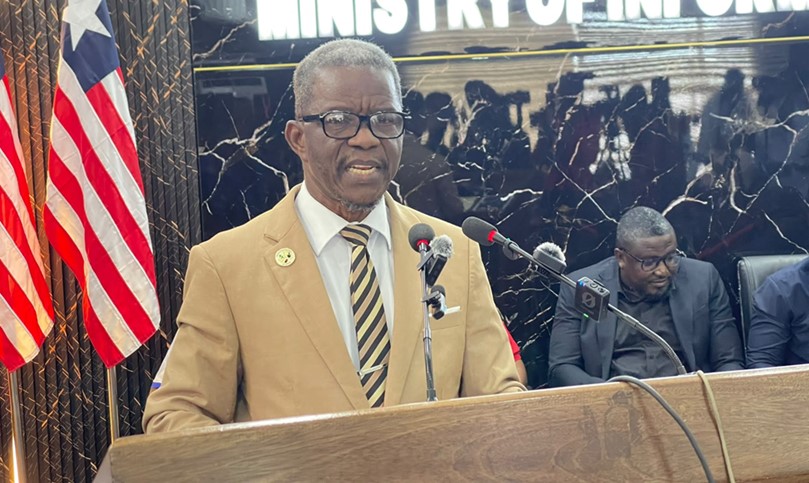
Speaking Tuesday at the Ministry of Information’s regular press briefing, the Chief Executive Officer of the LPB, Dr. Menmon P. Z. Dunah, outlined a series of regulatory reforms, achievements and ongoing initiatives being undertaken by the Board, while also highlighting challenges confronting the institution.
Dr. Dunah said effective pharmaceutical regulation remains an essential component of the Government of Liberia’s development agenda, particularly in the areas of good governance, human capital development and improved access to healthcare.
He explained that the LPB is mandated to ensure that people across Liberia have access to safe and quality-assured medicines and properly regulated pharmaceutical services.
According to him, the LPB is a statutory regulatory institution established through legislation in 1967 and approved in 1976, with responsibility for regulating the practice of pharmacy and pharmaceutical services in Liberia.
Its mandate, he said, includes protecting public health and safety through the regulation of the pharmacy profession, pharmaceutical premises, pharmacy practices and related services. The Board also advises the Ministry of Health (MOH) on pharmaceutical matters and serves as a specialized body responsible for directing and coordinating the practice of pharmacy in the country.
Dr. Dunah said the Board’s responsibilities include licensing and supervising pharmacies, registering pharmacy technicians and other pharmaceutical personnel, registering and regulating pharmaceutical premises, inspecting pharmacies, medicine stores and pharmaceutical outlets, and developing and enforcing standards for safe pharmaceutical services.
It also supervises pharmacy internship programs, develops professional codes of ethics, promotes continuing professional education and takes appropriate regulatory action against violators within the pharmaceutical sector.
Dr. Dunah said strengthening governance and enforcement of pharmaceutical laws and regulations has remained a major priority of the Board.
He disclosed that the LPB has intensified enforcement through the validation and harmonization of regulatory guidelines, standards and standard operating procedures applicable to pharmaceutical outlets.
Under the current regulatory approach, pharmaceutical premises are inspected to determine whether they meet established standards before permits are issued for their operation. The Board, he added, conducts investigative, routine and other forms of inspection of pharmacies and medicine stores, while ensuring that licensed professionals working in pharmacies possess the required education and competency.
Dr. Dunah said enforcement measures have also been taken against illegal pharmaceutical operations, including the unauthorized opening and operation of pharmaceutical outlets and the possession or distribution of substances considered harmful to the public.
He said the Board has strengthened its inspection procedures and documentation to ensure that pharmaceutical outlets comply with requirements designed to protect public safety.
“These activities directly contribute to the rule of law and governance by ensuring that pharmaceutical businesses and professionals operate within the scope of the law,” Dr. Dunah said. He added that the LPB remains committed to applying regulations fairly, transparently and consistently while protecting legitimate pharmaceutical businesses.
Community Pharmacies Move Center Stage
A significant portion of the Board’s presentation focused on the expansion and regulation of community pharmacy services across Liberia. Dr. Dunah said community pharmacies are increasingly important to Liberia’s primary healthcare system because they provide accessible points of contact between patients and qualified pharmaceutical professionals.
He noted that research indicates that more than half of people who feel sick may initially seek assistance at the community-pharmacy level. According to him, community pharmacies therefore help reduce the distance people must travel to access medicines and professional pharmaceutical advice, particularly in communities where formal health facilities may be limited.
He said properly regulated community pharmacies can also help reduce public exposure to unlicensed medicine sellers and substandard or falsified medicines, while reducing pressure on hospitals and health centers by appropriately addressing minor health conditions. Community pharmacies, he added, are particularly important for patients living with chronic conditions who require regular refills of medicines.
Dr. Dunah cited patients living with conditions such as diabetes, high cholesterol and cancer as examples of people who may benefit from access to properly regulated community pharmacies rather than having to travel long distances to hospitals simply to refill prescriptions.
He disclosed that the LPB, in collaboration with the National AIDS Control Program (NACP) and international partners, has supported direct drug-delivery services for people living with HIV through selected pharmaceutical facilities that meet established quality standards.
Medicines are strategically placed in communities with significant populations of people living with HIV to make access easier, improve adherence to medication and contribute to better health outcomes, he explained.
The Board is also collaborating with partners on reproductive health commodities, including nationwide training aimed at strengthening the capacity of pharmaceutical professionals to manage and distribute reproductive health commodities.
Dr. Dunah said these interventions are intended to improve access to reproductive health services and commodities while contributing to better health outcomes. He assured that the LPB’s inspectors are continuing field activities to ensure compliance with regulations governing community pharmacy practices.
The LPB CEO also highlighted education and human capital development as another area of focus for the institution. He said the Board has harmonized pharmaceutical training curricula with the West African Health Organization (WAHO) to ensure that Liberia’s pharmaceutical education and professional development remain aligned with regional standards.
Among the programs receiving attention are pharmacy degree programs, pharmacy internship programs, pharmaceutical technology training, continuing professional development, professional competency assessments and pharmaceutical practice standards.
Dr. Dunah said the Board is also advocating for increased opportunities for Liberian pharmacists to pursue postgraduate studies and specialized training in various areas of healthcare. He said such specialists, upon returning to Liberia, would be better positioned to provide high-quality pharmaceutical consultancy and contribute to the strengthening of the country’s healthcare sector.
The LPB is also continuing nationwide inspections of pharmacies, medicine stores and pharmaceutical outlets. According to Dr. Dunah, the inspections are designed to assess compliance with pharmacy regulations, ensure the quality and safety of pharmaceutical products and protect consumers at the point of service.
Where violations are identified, he said, the Board takes appropriate action, with sanctions ranging from suspension of licenses to closure of pharmaceutical outlets. He said the Board is also working with stakeholders to develop and validate regulations governing pharmacy practice.
These policy documents, according to Dr. Dunah, are intended to promote professional practices and protect the public while being harmonized with WAHO standards and international best practices. The broader objective, he said, is to establish a pharmaceutical regulatory environment that is clear, transparent, affordable and consistent.
Decentralization Beyond Monrovia
Dr. Dunah disclosed that the LPB has begun implementing a decentralization strategy designed to bring pharmaceutical regulation closer to communities outside Monrovia. He said the Board has established its first regional office in Nimba County, with the facility provided through government support.
The regional presence, he explained, is intended to improve regulatory oversight and strengthen the Board’s ability to monitor pharmaceutical practices in rural communities. However, he said additional regional hubs are needed to make the decentralization plan effective.
The LPB is proposing three additional regional hubs: one in Grand Gedeh County to support the Southeastern region, one in Lofa County to serve the Northwestern region and another in Grand Cape Mount County to support the Western region.
Dr. Dunah appealed to the Government of Liberia to support the establishment and operationalization of the additional hubs, describing decentralization as critical to public health and inclusive access to pharmaceutical regulation.
The LPB also recently commemorated World Pharmacists Day in Ganta, Nimba County, with a series of public awareness activities. Dr. Dunah said pharmacists used the occasion to conduct awareness and education campaigns on substance abuse, antimicrobial resistance and the pharmacy profession.
The activities included visits to five high schools in Ganta, where students were engaged on the importance of responsible medicine use and the dangers associated with substance abuse. Students from three universities in Ganta also participated in a scientific symposium focusing on substance abuse and antimicrobial resistance.
Among the Board’s ongoing priority activities is the completion of what Dr. Dunah described as Liberia’s first national pharmaceutical premises census and mapping exercise. The initiative is being implemented in collaboration with the Liberia Medicines and Health Products Regulatory Authority (LMHRA), the Pharmaceutical Society of Liberia, the Pharmacy Division of the MOH and the School of Pharmacy, among other stakeholders.
He said the mapping exercise is nearing completion and is expected to provide a clearer picture of pharmaceutical establishments operating across the country. Dr. Dunah also disclosed that the Board is monitoring 51 Doctor of Pharmacy internship opportunities as part of efforts to strengthen professional training and improve pharmaceutical services.
Other ongoing activities include training on medicine safety and rational medicine use, support to the national pharmacovigilance program, collaboration with stakeholders on drug and substance-abuse awareness, and the review and validation of a dispensing training curriculum.
He said the national training program for dispensers is expected to be launched in October following completion of the curriculum review and validation process.
Despite the progress outlined, Dr. Dunah acknowledged that the Board continues to face significant operational challenges. These include inadequate operational financing, limited transportation and field logistics, inadequate equipment and support, human-resource constraints, limited regional presence and the rapid expansion of pharmaceutical establishments requiring regulatory oversight.
He also cited delays in fully implementing the Board’s decentralization plan. According to him, these challenges could affect the Board’s ability to effectively regulate the rapidly expanding pharmaceutical sector across Liberia. He therefore called on the Government of Liberia to provide increased support to strengthen the Board’s operations and expand its regional presence.
Call for Graduate College of Pharmacy
The LPB CEO also appealed for government support for the establishment of Liberia’s first graduate college of pharmacy. He said the proposed postgraduate institution would create opportunities for Liberian pharmacists to specialize through residency training and strengthen their professional capacity.
According to Dr. Dunah, establishing such an institution with appropriate budgetary support would help build a stronger pool of pharmaceutical specialists capable of contributing to Liberia’s healthcare needs. In his closing remarks, Dr. Dunah issued a strong warning to members of the public against purchasing medicines from unlicensed vendors, commonly known as street medicine sellers.
He urged the public to purchase medicines only from licensed and authorized pharmaceutical establishments and to seek advice from qualified pharmacists and pharmaceutical professionals. He further encouraged people to use medicines strictly according to professional instructions.
Dr. Dunah also warned pharmacies and medicine stores against engaging in activities reserved for licensed health facilities. He specifically identified the administration of injections and intravenous drips, conducting deliveries and providing certain wound-management services as practices that are not authorized within ordinary pharmacy and medicine-store operations. He warned that facilities found engaging in such unauthorized activities could face immediate closure and license suspension.
The LPB CEO urged communities to become watchdogs by reporting suspected illegal pharmaceutical activities and helping authorities combat the circulation and misuse of unsafe medicines. He said the Board would continue working with the Government of Liberia, the MOH, development partners, the media, civil society and the Liberian people to build a stronger pharmaceutical regulatory system. “Stronger pharmaceutical regulatory systems are a foundation for a stronger health system,” Dr. Dunah emphasized.
Comments are closed.