

IMF Releases Us$50m Financing -Sando: ‘Funds To Bolster CBL Reserves’
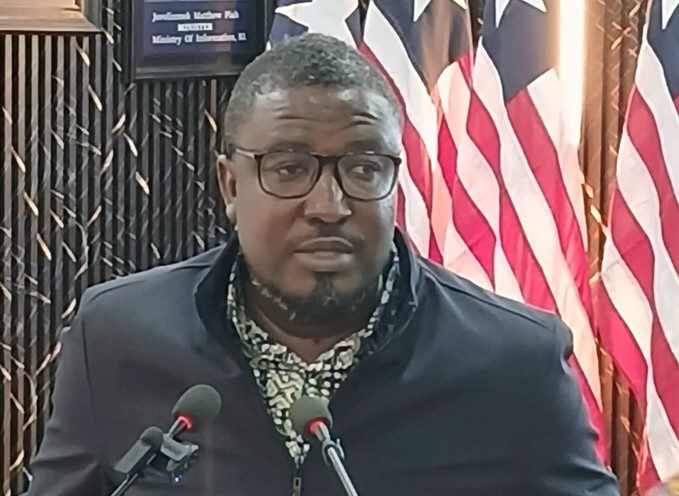
Monrovia – The Fund’s board approved about US$50 million after reviewing Liberia’s Extended Credit and Resilience facilities. Deputy Information Minister Daniel O. Sando insists the money is not ordinary budget support. It will bolster reserves at the Central Bank of Liberia. Yet the IMF’s checklist is demanding: VAT in 2027, bank restructuring and transparent handling of a one-off mining payment. Thursday’s wide-ranging briefing also covered President Boakai’s October 6 return, a Japanese-funded clinic in Harper and smart meters for Paynesville. Pundits say the reform program’s credibility will be judged by delivery at home over the coming year, As THE ANALYST George C. Flomo reports.
The Government of Liberia has welcomed the International Monetary Fund’s (IMF) approval of approximately US$50 million (L$9.12 billion) in additional financing, following the successful completion of the fourth review under the country’s Extended Credit Facility (ECF) arrangement and the first review under the Resilience and Sustainability Facility (RSF). Speaking Thursday at the regular press briefing of the Ministry of Information, Cultural Affairs and Tourism (MICAT), Deputy Minister for Press and Public Affairs Hon. Daniel O. Sando said the latest IMF decision provides additional resources to support Liberia’s macroeconomic stability and ongoing economic reform program.
The IMF Executive Board on September 28, 2026, completed the fourth review of Liberia’s 40-month ECF arrangement and the first review of the 21-month RSF arrangement. The decision makes immediately available Special Drawing Rights (SDR) 19.3 million, approximately US$26.2 million (L$4.78 billion), under the ECF, and SDR 17.62 million, approximately US$23.96 million (L$4.37 billion), under the RSF, totaling about US$50 million.
Sando said the ECF financing is not intended as ordinary budgetary support, but will help strengthen Liberia’s international reserves at the Central Bank of Liberia (CBL) and support the government’s efforts to preserve macroeconomic stability. According to the IMF, Liberia’s economy has remained resilient despite a more challenging external environment, with real GDP growth reaching 5.1 percent in 2025 and projected to accelerate to 5.5 percent in 2026. The Fund cited strong mining production, construction and manufacturing activities among the factors supporting growth.
The IMF also identified several areas requiring continued attention, including domestic revenue mobilization, implementation of the Value Added Tax (VAT) in 2027, transparent management of a one-off mining concession payment, bank restructuring, governance and fiscal transparency, and climate-resilience reforms. Sando said the government considers the latest approval an indication of continued confidence in Liberia’s economic reform program, while stressing the importance of maintaining the reforms underpinning the country’s engagement with the Fund.
Boakai Returns October 6
Meanwhile, Sando announced that President Joseph Nyuma Boakai is expected to return to Liberia on Tuesday, October 6, following an extensive official visit to the United States. According to Sando, President Boakai’s trip included participation in the 81st Session of the United Nations General Assembly (UNGA), meetings with congressional leaders, engagements with investors and participation in other high-level events, including a town hall meeting and an annual conference.
Sando described the President’s engagements as successful, noting that the administration would work with relevant government institutions to organize his reception upon arrival. He said MICAT would coordinate media coverage of the President’s return in collaboration with the Office of the Minister of State for Presidential Affairs and other relevant authorities.
A Thanksgiving and intercessory service is also expected to be held following the President’s return, before he proceeds to his residence. Sando encouraged journalists to participate in the airport reception, describing the President’s international engagements as an opportunity for Liberia to advance its interests before international and bilateral partners.
Liberia’s Stance on Nuclear Weapons
The Deputy Minister also highlighted Liberia’s position on nuclear disarmament and the peaceful use of atomic energy, as presented during the UNGA-related engagements. He said Liberia continues to support the peaceful application of atomic energy, multilateralism and international efforts aimed at preventing the proliferation of nuclear weapons.
Liberia, he noted, has urged non-parties to accede to the Nuclear Non-Proliferation Treaty (NPT) and called on nuclear-weapon states to fulfill their obligations under the treaty. Sando said Liberia’s position is that nuclear weapons must not be used, warning of the devastating humanitarian consequences that could result from a nuclear explosion. He emphasized the importance of diplomacy, mutual understanding and international cooperation in addressing global security challenges.
Japan Funds Harper Clinic
On the health front, Sando announced a US$1.5 million (L$273.54 million) grant from the Government of Japan to support the construction of an infectious disease clinic in Maryland County. According to the briefing, the facility will be constructed at the JJ Dossen Hospital in Harper, Maryland County.
The Ministry of Health (MOH) is expected to oversee implementation, while Tech International Incorporated will serve as the contractor. The project is expected to strengthen Liberia’s capacity to prevent, detect and respond to infectious diseases, particularly in the southeast of the country.
Overpass Traffic Advisory Issued
The Ministry of Public Works (MPW), in coordination with the Liberia National Police (LNP), has also issued a traffic advisory concerning the ongoing construction of the SKD Boulevard overpass. Sando said contractors will continue transporting precast concrete materials during the exercise, which is expected to run through December.
The transportation of the materials from the contractor’s campsite at the SKD Sports Complex to the eastern and western overpass locations is intended to keep the project within schedule and avoid delays. Motorists have consequently been urged to exercise patience and caution around the construction zones and comply with instructions from police officers assigned to manage traffic.
LACRA Engages Palm Oil Concessionaires
Sando further disclosed that the Liberia Agricultural Commodity Regulatory Authority (LACRA) has begun efforts to strengthen collaboration with major palm oil concessionaires operating in Liberia. He said a one-day strategic dialogue brought together LACRA officials and representatives of major palm oil companies to discuss regulatory and operational challenges confronting the sector.
The discussions reportedly focused on regulatory and export compliance, quality control, royalty obligations, operational challenges and strategies for addressing emerging issues. At the conclusion of the meeting, LACRA and representatives of the concessionaires agreed to establish a six-member technical committee, comprising three representatives from LACRA and three from the concessionaires. The committee is expected to review Liberia’s regulatory framework governing the palm oil sector, with particular attention to royalty obligations, quality control, regulatory compliance and export requirements.
Gola Forest Conservation Drive
The government has also announced the launch of a major conservation initiative targeting the Gola Forest landscape, with funding of approximately €4.7 million from the German Development Bank (KfW). Sando said the project is being implemented in collaboration with the Wild Chimpanzee Foundation (WCF) and other local and international partners and is intended to strengthen biodiversity protection and sustainable management of the forest ecosystem. The Gola Forest is described as one of Liberia’s remaining blocks of Upper Guinean rainforest and provides habitat for species including the pygmy hippopotamus and forest elephant.
The project’s funding package is expected to support infrastructure development, equipment procurement, recruitment and training of conservation personnel and rangers, scientific research, park management and community-based conservation activities. Among the anticipated benefits for surrounding communities are solar lighting, road improvements, construction of staff and operational facilities, employment opportunities, savings schemes and community patrol programs. The initiative is being presented as an effort to combine national leadership, international assistance and community participation in protecting Liberia’s forest resources.
Judiciary Defends Contempt Powers
Sando also addressed controversy surrounding the detention of a journalist, explaining the position of the Judiciary regarding contempt-of-court proceedings. He said the Judiciary has clarified that contempt of court, particularly criminal contempt, should not be misconstrued as an attempt to interfere with or suppress legitimate activities.
According to a statement from the Judiciary cited during the briefing, courts in Liberia possess inherent powers to punish contempt and to determine what conduct constitutes contempt. Sando referenced a 1974 unanimous opinion of the Supreme Court, which recognized the courts’ authority to address conduct that tends to impede, obstruct or interfere with the administration of justice. The issue has generated public discussion, particularly concerning the boundaries between judicial authority and other rights and responsibilities within Liberia’s democratic system.
LEC Rolls Out Smart Meters
The Liberia Electricity Corporation (LEC) is preparing to commence installation of 14,500 smart meters across Paynesville City beginning October 7. Sando said the project is being implemented in collaboration with Synapse and represents part of efforts to modernize electricity service delivery.
The smart meters are expected to replace estimated or manual billing with actual consumption measurements, remote meter reading and prepaid functionality. According to the briefing, the technology will also assist with tamper detection, outage monitoring and the identification of electricity losses.
Customers will reportedly be able to purchase electricity tokens through mobile-money platforms, authorized vendors and the My LEC app. The deployment is part of Liberia’s broader effort to modernize its electricity distribution and improve revenue collection while providing consumers with more accurate information about their electricity consumption.
Reform Agenda Remains Central
While announcing the latest IMF financing, Sando’s remarks also underscored the continuing importance of Liberia’s economic reform agenda. The IMF said Liberia’s latest reviews showed continued progress under both the ECF and RSF arrangements, while noting that further reforms remain necessary. The Fund specifically pointed to domestic revenue mobilization, bank restructuring, reduction of non-performing loans, governance reforms, fiscal transparency and climate-related measures.
The latest disbursement brings total disbursements under Liberia’s current ECF arrangement to SDR 96.5 million, approximately US$131.67 million (L$24.01 billion), according to the IMF. The separate RSF arrangement provides Liberia with total access of SDR 193.8 million, approximately US$265 million (L$48.33 billion), to support reforms aimed at strengthening resilience to climate-related shocks.
For the Boakai administration, the latest approval comes as it continues to implement reforms tied to the IMF-supported economic program, with the government expected to balance economic stabilization measures with demands for infrastructure development, public services and social investment. The Thursday briefing therefore provided a broad update on the administration’s economic, diplomatic, infrastructure, energy, health, environmental and governance priorities, as Liberia continues to pursue reforms while seeking additional domestic and international support for its development agenda.
Comments are closed.