

“I Feel Vindicated”-Former LFA chief revisits reform battle
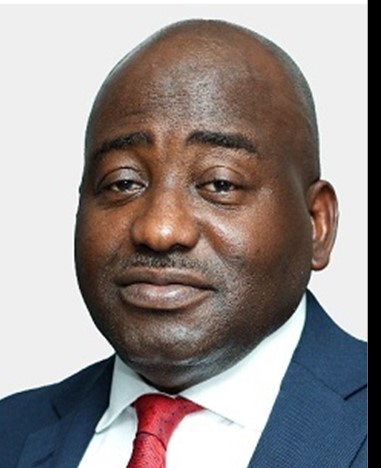
MONROVIA – The return of Musa Hassan Bility to the African football debate is less about one man’s grievance than about control. Who governs the continental game, and on whose mandate? The former Liberia Football Association president has seized on FIFA’s current troubles. He argues that warnings he raised a decade ago now stand vindicated. His intervention revives a structural tension between institutional independence and financial dependency. It also challenges whether the Confederation of African Football speaks for its members or only its executive. The dispute reaches past his own record. It touches the terms on which Africa’s fifty-four associations exercise their voice. That larger question is what gives his statement weight, as THE ANALYST reports.
In a lengthy statement circulated on social media, Bility, a former member of the Confederation of African Football (CAF) Executive Committee, revisited his passage through continental football politics and tied it to FIFA’s present difficulties. He said he took no pleasure in the crisis facing FIFA President Gianni Infantino, but argued that it had exposed a pattern he had long described. Bility framed his account as a call for reform rather than revenge, insisting that his aim was the independence of the game.
From Support To Rupture
Bility recalled backing Prince Ali bin Al Hussein in the 2016 FIFA presidential election before shifting to Infantino in the second round, after talks with the Infantino campaign. Liberia, he said, was among the associations that broke from the official continental line, a choice he described as made in good faith.
He believed a reformed FIFA would grant Africa greater control of its own affairs. Bility said he then joined the movement that helped elect Ahmad Ahmad to the CAF presidency in 2017, identifying former Ghana Football Association president Kwesi Nyantakyi as its central figure. That coalition, in his telling, was later dismantled.
Not Why We Elected
The rupture, by Bility’s account, came when FIFA moved to place its Secretary General inside CAF to run its daily administration. He characterized the step as a surrender of African football’s autonomy rather than a reform.
Bility said he wrote to both bodies demanding an audit when questions arose over CAF’s administration under Ahmad, insisting his aim was accountability rather than the defense of any individual. He recalled confronting Infantino in person, telling him the intervention was not what reformers had fought for. He said he was later warned of consequences should he vote against FIFA’s expanded role, a warning he characterized as blackmail.
A Disputed Ban
Bility also returned to the FIFA disciplinary case that ended his football career. He said the proceedings concerned matters dating back years, and that he had challenged both the findings and the rules applied to him.
While acknowledging his appeal failed, he maintained he had not committed the wrongdoing for which he was condemned. Bility said a later Liberia Football Association (LFA) audit found that the association in fact owed him money, a finding he argued sat awkwardly with the public account of his case.
What wounded him most, he said, was the silence of African football bodies unwilling to challenge FIFA for fear of becoming targets.
Question Of Mandate
Turning to the present, Bility questioned CAF’s reported declaration of unanimous support for Infantino amid controversy over FIFA governance.
He asked on whose mandate such a position had been taken, arguing that a matter touching all of Africa’s associations could not be settled by the executive alone. An executive committee statement, he said, was not the same as a mandate from the fifty-four members. Bility called instead for an emergency consultation or an extraordinary congress at which every association could weigh the facts.
Africa, he warned, should not be treated as a bloc of votes to be mobilized whenever FIFA’s leadership came under pressure.
Money And Dependency
Bility linked the dispute to what he called Africa’s dependence on FIFA funding, arguing that assistance tied to political obedience amounted to dependency rather than development.
Real progress, he said, would require investment in domestic leagues, youth academies, coaching, women’s football and modern infrastructure built on the continent itself. He noted that much of Africa’s success had come from players developed abroad before returning to their national teams.
Bility urged CAF to reconsider its endorsement and convene the members for an independent review. He said he sought not revenge but the liberation of football, adding that his conviction had survived the interruption of his career.
Comments are closed.