

“Give Me Raw Rubber, I will Produce Tyre by June 2028”-Jeety Challenges Govt; Backs Challenge with US$18M Factory Expansion
MONROVIA – Liberia’s long-standing struggle to transition from a raw material exporter to a value-adding industrial economy has found renewed urgency in a bold proposition from one of its leading private sector actors. As global markets increasingly reward countries that process rather than export primary commodities, the stakes for Liberia’s rubber sector have never been higher. At the center of this moment is a high-risk, high-reward industrial gamble—one that promises jobs, technology transfer, and national pride, but also exposes structural weaknesses in supply chains and policy coherence. The question now confronting policymakers is whether Liberia is prepared to align its agricultural output with industrial ambition. THE ANALYST reports.
Jeety Rubber LLC, one of Liberia’s leading rubber processors, has issued what may be one of the most consequential industrial challenges in recent years—calling on the Government of Liberia to guarantee a steady and substantial supply of raw rubber as a prerequisite for launching domestic tire production by mid-2028.
At the heart of this bold declaration is a simple but far-reaching proposition: if Liberia can secure and retain its raw materials for domestic processing, it can unlock a new era of industrialization. If it cannot, the country risks remaining trapped in a cycle of exporting value rather than creating it.
The $18 Million Expansion and a National Industrial Promise
The challenge comes as Jeety Rubber approaches a critical milestone in its ongoing $18 million second-phase factory expansion—an investment that signals both confidence in Liberia’s industrial potential and concern about its structural limitations.
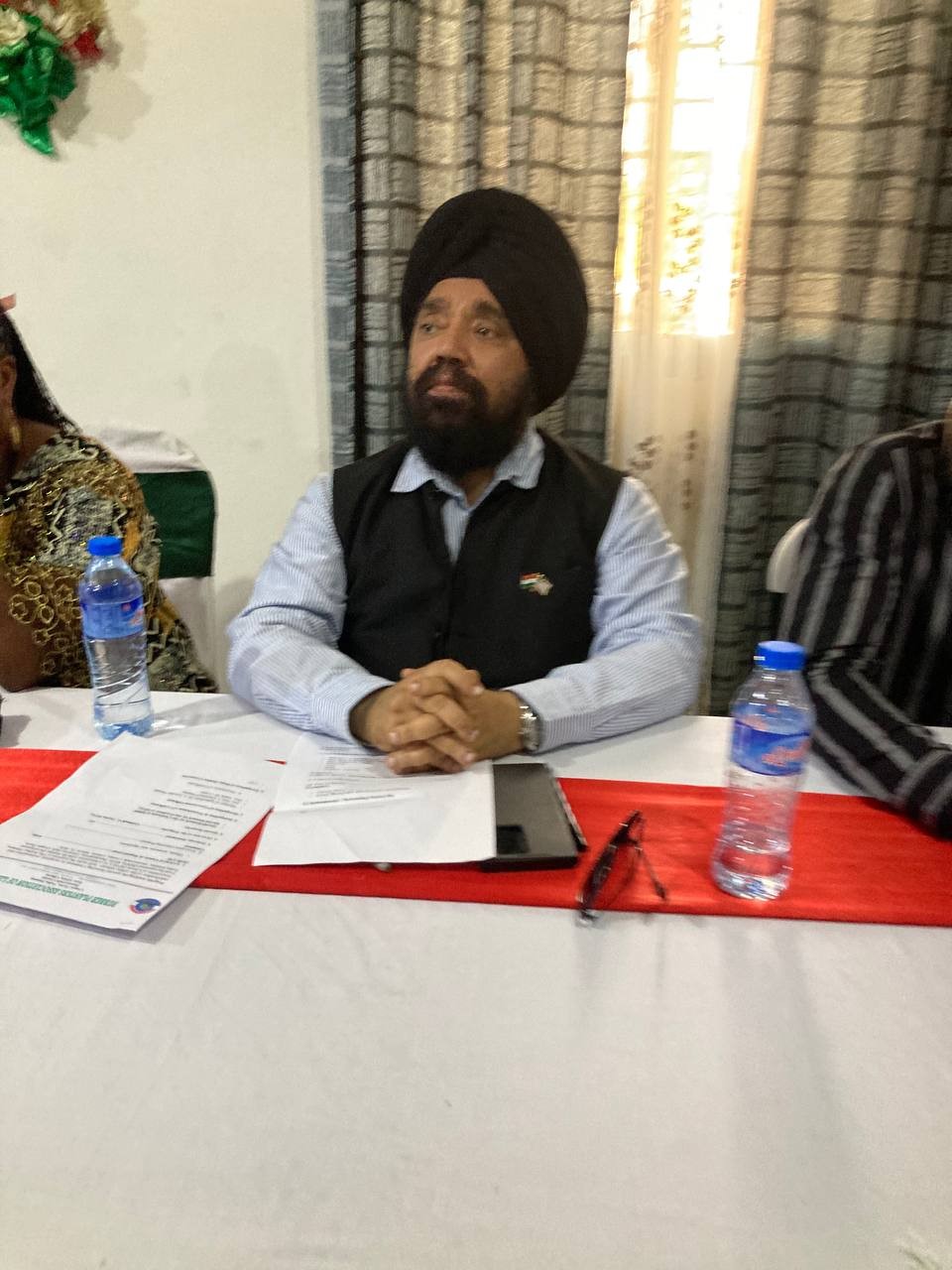
Owned by businessman Upjit Singh Sachdeva, widely known as Jeety, the company has already established itself as a major player in Liberia’s rubber processing sector. But its latest ambition—to produce the country’s first domestically manufactured tires—represents a leap into higher-value industrial production.
“By 2028, either June or July, Liberians can expect the first made-in-Liberia tire,” Mr. Jeety declared during a recognition ceremony attended by senior government officials, including the Minister of Agriculture.
Yet, even as he projected confidence, his message carried a clear warning: the dream of local tire manufacturing is entirely dependent on securing adequate raw material.
“But if I do not have the raw material, I will not be able to run the factory and do the expansion to make tires,” he emphasized.

The Supply Gap: A Structural Constraint
The scale of the challenge is striking. Once the new processing line becomes operational—expected by mid-2026—the factory will require approximately 550 tonnes of wet rubber daily. This represents more than double its current consumption of between 200 and 250 tonnes per day.
The expansion itself is technically significant. The addition of a new processing line capable of handling eight tons of rubber per hour will nearly double the company’s existing capacity of five tons per hour.
However, this increase in processing capability exposes a deeper structural issue: Liberia’s inability to consistently channel its raw rubber supply toward domestic value addition.
Despite being a major rubber-producing country, Liberia continues to export significant volumes of unprocessed rubber, commonly referred to as “cuplumps.” This practice, while generating immediate export revenue, effectively transfers value creation—and jobs—to foreign markets.
“Exporting Jobs”: A Sharp Economic Critique
Mr. Jeety did not mince words in describing this dynamic.
“When you export unprocessed rubber, you are exporting jobs. You are giving jobs to people in Malaysia,” he said, delivering a critique that resonates with broader debates about Africa’s place in the global value chain.
This argument touches on a fundamental economic dilemma. For decades, Liberia’s economy has been structured around the export of raw commodities, from rubber to iron ore. While this model provides foreign exchange earnings, it limits domestic industrial growth and job creation.
By contrast, processing raw materials locally allows countries to capture additional value, create employment, and build industrial capacity.
In this context, Jeety’s call for restricting or banning the export of unprocessed rubber represents more than a business interest—it is a policy proposition aimed at reshaping Liberia’s economic model.
Policy Implications: Between Protection and Market Freedom
The proposal to ban or restrict cuplump exports is likely to generate intense debate within policy circles.
On one hand, such a move could ensure that local manufacturers have access to the raw materials needed to operate at scale. It could also stimulate investment in processing facilities, creating jobs and enhancing economic resilience.
On the other hand, restricting exports could disrupt existing market dynamics, potentially affecting smallholder farmers who rely on selling raw rubber to the highest bidder, including international buyers.
Balancing these competing interests will require careful policy design—one that supports industrialization without undermining farmer livelihoods.
The Farmer Dimension: Pricing and Incentives
Central to Jeety’s argument is the role of farm-gate pricing.
He contends that improving the prices paid to rubber farmers would not only enhance their livelihoods but also increase the volume of rubber supplied to the market.
“If farmers get a better price, they develop. They are able to feed their children. They are able to send their children to better schools,” he said.
This perspective highlights a critical link in the value chain. Industrial success depends not only on factory capacity but also on the productivity and incentives of primary producers.
If farmers are not adequately compensated, they may reduce production or divert supply to alternative markets, further exacerbating the raw material shortage.
Investment at Risk: A Conditional Commitment
Perhaps the most striking aspect of Jeety’s message is the conditional nature of his future investment.
“I will not be investing 35 to 40 million dollars more if I’m not getting enough rubber,” he stated.
This declaration underscores the high stakes involved. Beyond the current $18 million expansion, the company is considering an additional $35 to $40 million investment to fully realize its tire manufacturing ambitions.
However, this investment is contingent on policy alignment and supply assurance—factors that lie largely outside the company’s direct control.
Recognition Amid Challenge
Despite these challenges, Jeety Rubber has earned recognition for its contributions to Liberia’s rubber sector.
The company was recently honored by the Rubber Planters Association of Liberia (RPAL) and the Rubber Development Fund Incorporated (RDFI), which praised its support for smallholder farmers during periods of market uncertainty.
Notably, the company continued purchasing rubber even when other buyers suspended operations in protest of government-imposed pricing regulations.
This commitment has positioned Jeety Rubber as a key partner in the sector, strengthening its credibility as it pushes for broader policy reforms.
A Test Case for Industrial Transformation
The implications of this development extend far beyond a single company.
Jeety’s proposal effectively presents Liberia with a test case: can the country transition from a raw material exporter to a value-adding industrial economy?
Achieving this transformation will require coordinated action across multiple fronts—agricultural policy, industrial strategy, trade regulation, and infrastructure development.
It will also require political will. Restricting raw material exports, investing in local processing, and ensuring fair pricing for farmers are not merely technical decisions; they are strategic choices that define the direction of national development.
The Road to 2028: Opportunity and Uncertainty
As Liberia looks toward 2028, the promise of producing its first domestically manufactured tire carries both symbolic and practical significance.
Symbolically, it represents a break from the country’s historical dependence on raw exports. Practically, it offers the potential for job creation, technological advancement, and increased economic resilience.
Yet, the path to this milestone is far from certain.
Without a reliable supply of raw rubber, the entire vision could stall—turning what could be a transformative achievement into a missed opportunity.
A National Decision Point
Ultimately, the challenge posed by Jeety Rubber is not just to the government, but to the nation as a whole.
It forces a fundamental question:
Is Liberia prepared to prioritize long-term industrial development over short-term export gains?
The answer to this question will shape not only the future of the rubber sector but also the broader trajectory of the country’s economic development.
For now, the message from Jeety is clear—Liberia has the resources, the investment interest, and the opportunity. What remains uncertain is whether it has the policy alignment and strategic focus needed to turn that opportunity into reality.
Comments are closed.