

Former Finance Minister Now Senator Weighs In -Shares Perspectives on $1.2b Budget, $200m AML Bogus
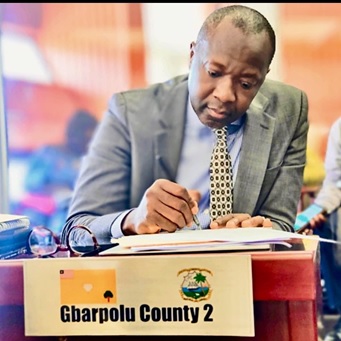
MONROVIA – Liberia’s fiscal landscape is poised for significant growth, but doubts have been cast on the feasibility of the ambitious $1.2 billion 2026 fiscal budget. Amidst the turbulent discourse, Senator Amara Konneh, former Finance Minister and current representative of Gbarpolu County, is weighing in on the matter. He notes that the country’s revenue could reach $1 billion in 2026, excluding the $200 million AML bonus, but emphasizes that this milestone hinges on the government’s ability to implement key policy actions and strengthen revenue collection. According to Senator Konneh’s analysis, Liberia must move beyond reliance on windfall revenues and prioritize sustainable growth, improved governance, and inclusive development. The Analyst reports.
Senator Amara Konneh has emphasized that Liberia’s fiscal capacity is expanding, with the potential to reach $1 billion in revenue in 2026, excluding the $200 million AML bonus, if the government implements key policy actions and strengthens revenue collection.
In a social media post, Senator Konneh noted that the growth in revenue is driven by increases in mining, domestic revenue, SOE contributions, and targeted policy reforms. The mining sector is expected to contribute significantly, with growth in ArcelorMittal, Bea Mountain, and China Union operations boosting corporate tax revenues.
Domestic revenue is also projected to grow, driven by GDP growth from 4.6% to 5.5%, which will boost consumption taxes, excise, and income streams, he said.
Senator Konneh emphasized the need for the Executive Branch to prioritize strategic actions to ensure revenue targets are met.
These actions include speeding up port infrastructure completion, supporting the expansion of the Yekepa-Buchanan corridor, and overcoming logistical and regulatory obstacles to restore China Union operations.
Additionally, he said the government should review fiscal terms and tax implications of the TotalEnergies Agreement, engage stakeholders to unlock sustainable logging and carbon credit revenues, and ensure Bea Mountain’s compliance with royalty and CIT obligations.
Senator Konneh stressed the importance of improving SOEs’ corporate governance, noting that many SOEs are not contributing adequately to the budget due to inefficiencies and entrenched political interests.
To address this, the government must take direct intervention to ensure SOEs are run efficiently and contribute to the national revenue.
Senator Konneh warned that achieving the $1 billion revenue milestone will not happen automatically and requires adequate funding for the Liberia Revenue Authority, strengthened enforcement capacity, and upgraded technologies.
The government must also look beyond political friendships and commercial interests to hold private-sector friends and SOE leaders accountable and shame them if they fail to pay their taxes and budget contributions.
“We must enhance compliance, enforce SOEs’ contribution thresholds, and align spending with AAID priorities, ensuring fiscal expansion results in inclusive, sustainable development outcomes,” Senator Konneh stated.
Full text of the Gbarpolu Senator’s Analysis below:
𝗦𝗲𝗿𝗶𝗲𝘀 𝟭: 𝗪𝗵𝘆 𝗨𝗻𝗱𝗲𝗿𝘀𝘁𝗮𝗻𝗱𝗶𝗻𝗴 𝘁𝗵𝗲 𝗥𝗲𝘃𝗲𝗻𝘂𝗲 𝗙𝗿𝗮𝗺𝗲𝘄𝗼𝗿𝗸 𝗼𝗳 𝘁𝗵𝗲 $𝟭.𝟮 𝗕𝗶𝗹𝗹𝗶𝗼𝗻 𝗗𝗿𝗮𝗳𝘁 𝗙𝗬𝟮𝟬𝟮𝟲 𝗕𝘂𝗱𝗴𝗲𝘁 (𝗘𝘅𝗰𝗹𝘂𝗱𝗶𝗻𝗴 𝗔𝗠𝗟 $𝟮𝟬𝟬𝗺 𝗕𝗼𝗻𝘂𝘀) 𝗠𝗮𝘁𝘁𝗲𝗿𝘀
By Senator Amara Konneh
Yesterday’s Senate Ways and Means Committee hearings on the revenue projections in the proposed FY2026 Budget showed that Liberia’s fiscal capacity is expanding beyond windfalls. I believe that Liberia’s fiscal space could reach $1 billion in 2026, even without the AML windfall, if the Liberia Revenue Authority (LRA), supported by the Executive and Legislative Branches, enforces the policy actions that underpin the assumptions. Increases in mining, domestic revenue, SOE integration, and targeted policy reforms drive this growth. The rise in tax revenue results from two measures: an increase in the GST rate (from 12 to 13 percent) and a 2 percent presumptive CIT on major concessions. On the non-tax side, property income—mainly from significant increases in royalties—is expected to grow substantially.
To sustain this growth, we must enhance compliance, enforce SOEs’ contribution thresholds, and align spending with AAID priorities, ensuring fiscal expansion results in inclusive, sustainable development outcomes, as I outlined in my statement on the budget.
𝐊𝐞𝐲 𝐃𝐫𝐢𝐯𝐞𝐫𝐬 𝐨𝐟 𝐆𝐫𝐨𝐰𝐭𝐡
1. Mining Sector CIT (+$35M-$57M): Growth in ArcelorMittal, Bea Mountain, and China Union operations boosts corporate tax revenues.
2. Domestic Revenue Growth (+$45M): GDP growth from 4.6% to 5.5% boosts consumption taxes, excise, and income streams.
3. SOE Contribution (+$30M): Better compliance and profitability of State-Owned Enterprises expand fiscal space.
4. Policy Measures (+$14M): Implementing GST and CIT adjustments (2%) improves efficiency and broadens the tax base.
5. External Resources (+$72M): Continued support from development partners sustains investment in priority programs.
The attached FY2025 to FY2026 revenue walk outlines estimated revenue potential and strategic interventions across priority sectors. We have also attached the sectoral revenue potentials.
𝐀𝐜𝐭𝐢𝐨𝐧𝐬 𝐭𝐡𝐞 𝐄𝐱𝐞𝐜𝐮𝐭𝐢𝐯𝐞 𝐁𝐫𝐚𝐧𝐜𝐡 𝐌𝐮𝐬𝐭 𝐓𝐚𝐤𝐞 𝐭𝐨 𝐋𝐨𝐜𝐤 𝐢𝐧 𝐏𝐫𝐨𝐣𝐞𝐜𝐭𝐞𝐝 𝐑𝐞𝐯𝐞𝐧𝐮𝐞 𝐎𝐮𝐭𝐜𝐨𝐦𝐞𝐬
To ensure Liberia’s FY2026 revenue targets are not only projected but achieved, the following strategic actions should be prioritized:
1. Port Access (Bao Chico): Speed up port infrastructure completion to enable export readiness.
2. Rail & Road Networks (ArcelorMittal): Support the expansion of the Yekepa–Buchanan corridor to facilitate 20M tons of exports.
3. China Union Activation: Overcome logistical and regulatory obstacles to restore operations.’
4. TotalEnergies Agreement: Review fiscal terms and tax implications to maximize returns.
5. Forestry Sector: Engage stakeholders to unlock sustainable logging and carbon credit revenues. Forestry revenue has been declining in the last five years.
6. Bea Mountain Compliance: Ensure royalty and CIT compliance as gold output doubles.
7. Improve SOEs’ Corporate Governance: A key issue is the limited contribution of SOEs to the budget. While SOEs generate income, they are not run efficiently, which hinders their contribution. The political economy surrounding the SOEs’ situation is deeply entrenched and will require the president’s direct intervention throughout FY26.
𝐄𝐱𝐩𝐞𝐜𝐭𝐞𝐝 𝐎𝐮𝐭𝐜𝐨𝐦𝐞𝐬
These actions directly support structural revenue gains, enabling Liberia to surpass $1 billion without AML’s $200M bonus in FY2026 through:
• $931 million in domestic revenue
• $72 million in external resources, if we meet the performance benchmarks
• Total: $1.003 billion without AML’s $200M bonus.
𝗠𝘆 𝗳𝗶𝗻𝗮𝗹 𝗻𝗼𝘁𝗲: Raising over $1 billion will not happen automatically. We could fall short if the government does not take steps to unlock the strategic actions outlined above, not exhaustive, we outlined above. We must adequately fund the LRA to strengthen its enforcement capacity and upgrade its technologies. Tax collectors are often not friendly. We need to look beyond political friendships and commercial interests to hold private-sector friends and SOE leaders accountable and shame them if they fail to pay their taxes and budget contributions.
Did you follow the hearing? Have you reviewed the revenue projections? Or, are you learning about the revenue projections for the first time? Please share your thoughts here or inbox me to help us improve the revenue part of the FY26 budget.
Comments are closed.