

ArcelorMittal Assesses 218 Residents -Reinforces Commitment to Grand Bassa Jobs
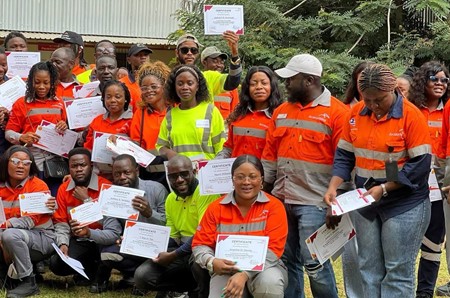
MONROVIA – ArcelorMittal Liberia’s (AML) assessment of 218 Grand Bassa residents represents more than routine recruitment; it tests a model. The Learning Ability Battery (LAB) approach deliberately bypasses formal academic credentials, screening instead for trainable aptitude. That design choice addresses a structural tension in extractive economies: impacted host communities often lack conventional qualifications. The stakes for fenceline communities are tangible and immediate, with more than 300 residents employed through the program since 2024. Successful candidates enter semi-skilled positions or advance toward apprenticeships at the company’s training academy. Whether the model scales alongside AML’s expanding operations remains the open question. It will determine if local content rhetoric hardens into durable and verifiable practice, as THE ANALYST reports.
ArcelorMittal Liberia (AML) is concluding a comprehensive round of Learning Ability Battery (LAB) assessments for 218 residents from its operational fenceline communities in Grand Bassa County, further strengthening the company’s commitment to creating employment opportunities for people living in communities directly impacted by its mining and rail operations.
The standardized assessment, which evaluates candidates in Mathematics, English, and physical fitness, serves as a key entry point into AML’s specialized training programs and general employment pool. The exercise is being conducted across three regional centers: Frank Diggs Town, Compound #3, and Buchanan City.
Assessing Aptitude, Not Credentials
The LAB initiative forms part of AML’s broader local content and community development strategy, which prioritizes employment opportunities for qualified residents of its host and fenceline communities. Through this approach, the company continues to ensure that communities closest to its operations directly benefit from the economic opportunities generated by its investments in Liberia.
Introduced in 2024, the LAB program was specifically designed to reduce employment barriers for community members who may not possess the formal academic qualifications typically required through conventional corporate recruitment processes. Instead, the assessment identifies candidates with the aptitude and potential to succeed in industrial operations through structured training and skills development.
Pathways Into Employment
Based on their performance, successful candidates are placed into three categories, P1, P2, and P3, which determine their eligibility for immediate placement into essential semi-skilled and unskilled operational positions, including Tally Clerks, Tarpaulin Attendants, and Spotters. Beyond direct employment, the assessment also serves as a gateway into advanced technical training at the ArcelorMittal Liberia Training Academy.
High-performing candidates may be selected for specialized apprenticeship programs that prepare them for careers as Process Operators, Articulated Dump Truck (ADT) Operators, and Heavy-Duty Equipment Operators. The pathway is designed to convert raw aptitude into industrial skills over structured training cycles.
Measurable Community Results
Since the introduction of the LAB initiative, the program has delivered measurable results for Grand Bassa communities. Over the past two years, more than 300 residents from AML’s operational fenceline communities have secured formal employment through the initiative, while an additional 26 candidates were recently admitted into the company’s highly competitive vocational apprenticeship program.
Community Relations Superintendent Wroquah Samuels-Kamara said the initiative reflects AML’s commitment to transparent, inclusive, and community-focused recruitment. “The LAB assessment is not about filtering people out; it is about discovering potential and creating paths where traditional barriers once stood,” Samuels-Kamara said. “By meeting our communities where they are, we are ensuring that the economic and developmental benefits of our operations are felt directly at the grassroots level.”
Company Commitment Reaffirmed
He added that creating sustainable employment opportunities for residents of AML’s host and fenceline communities remains a key pillar of the company’s social investment strategy.
“ArcelorMittal Liberia recognizes that our success must translate into meaningful opportunities for the people living in the communities where we operate,” he said. “Through initiatives like the LAB assessment and our vocational training programs, we are building a pipeline of skilled local talent while ensuring that community residents have a fair opportunity to participate in the company’s growth.”
The LAB assessment complements AML’s wider workforce development initiatives, including technical training, apprenticeships, and capacity-building programs that continue to equip Liberians with the skills needed for long-term careers in the country’s growing mining sector.
As AML continues to expand its operations, the company says it remains committed to giving qualified residents from its impacted and fenceline communities priority access to employment opportunities, ensuring that local communities remain central beneficiaries of its ongoing investment and economic growth in Liberia.
Comments are closed.