

African Women Leaders Convene in Dakar -EJS Center Hosts 70 from 29 countries
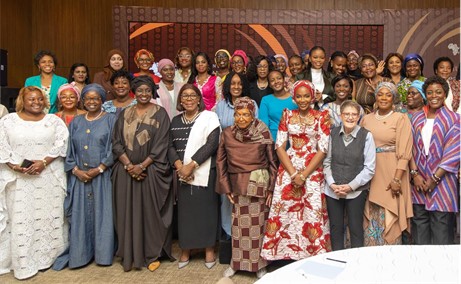
MONROVIA – A high-level gathering in Dakar is pressing Africa to move women from symbolism to real power. The Ellen Johnson Sirleaf Presidential Center for Women and Development opened its 2026 Amujae forum there. It has brought together 70 accomplished women leaders drawn from 29 African countries. Former heads of state, royalty, government officials and champions joined them. Organizers deliberately framed the meeting as a working session, not a celebration. The Center wants to build a durable pipeline into Africa’s highest public offices. Speakers repeatedly pressed the leaders to open doors for the women who follow. They cast progress as unfinished and fragile. The stakes, participants argued, are nothing less than generational, as THE ANALYST reports.
The Ellen Johnson Sirleaf Presidential Center for Women and Development (EJS Center) opened its 2026 Amujae High-Level Leadership Forum on 13 August in Dakar, Senegal. The gathering convened Amujae Leaders from five cohorts alongside former heads of state, royalty, government officials, allies and champions of women’s leadership from across the continent.
Now in its sixth year, the Amujae Initiative is the EJS Center’s flagship program, designed by former President Ellen Johnson Sirleaf to help accomplished African women ascend to the highest levels of public leadership. This year’s forum brought together 70 women leaders representing 29 countries across Africa.
Organizers said the opening ceremony set the tone for a forum dedicated to examining women’s leadership from every angle and deepening the pan-African sisterhood at the heart of the Initiative. The emphasis, they stressed, was on collective advancement rather than individual achievement.
Opening the plenary, EJS Center Executive Director Ellen Pratt-Harris welcomed dignitaries and Amujae Leaders and thanked the government and people of Senegal for hosting. Addressing the leaders directly, she said the forum had gathered “to decide how much further we will go together,” describing it not as a celebration of arrival but as a call to keep rising and to bring others along.
The Center observed a moment of silence in honor of two Amujae Leaders who died over the past two years, Joyce Chitsulo of Malawi and Aida Alassane N’diaye of Côte d’Ivoire. Organizers said their contributions continue to live on within the Amujae network and in their respective countries.
Royalty Recalls Women’s Legacy
Her Royal Majesty Olori Atuwatse III of the Warri Kingdom in Nigeria delivered an address on recovering Africa’s tradition of women’s leadership. Women’s leadership, she said, “is not a new idea we are forming,” but “something we are recovering.”
Recalling the queens, warriors and market women who shaped African societies, she challenged the forum to imagine an Africa where a woman leading a major institution “is not a headline, but a simple Tuesday.” True leadership, she added, is measured not by what one accumulates but by what one replicates, warning that power which cannot be reproduced is merely a position.
Presidents Add Their Voices
In a video address, Namibian President Netumbo Nandi-Ndaitwah commended the EJS Center for advancing African women in public leadership. Reflecting on the thirty-one years since the Beijing Declaration, she said progress must be measured against persistent challenges, insisting that “no continent can speak of true development while excluding half of its population.”
As the first woman to lead Namibia, President Nandi-Ndaitwah described her ascension as belonging equally to every young girl who now dares to dream of the highest office. She called on women leaders to keep the door open for those who follow.
Catherine Samba-Panza, former President of the Central African Republic, spoke of the future she saw in the room, from ministers and parliamentarians to judges and peacemakers. Drawing on her experience leading during crisis, she reminded the gathering that “female leadership is not a quota; it is an imperative for Africa’s growth.”
She urged the Amujae Leaders to be ambitious, to reject imposter syndrome and to embrace intergenerational solidarity. “Do not ask permission to impact your communities,” she said, warning that Africa does not have time for unkept promises.
Aminata Touré, former Prime Minister of Senegal, offered a candid examination of the barriers facing women in African politics. She cited gender stereotypes, campaign financing and media coverage that judges women on appearance rather than competence.
Calling for 50–50 parity laws, stronger protections against gender-based violence in politics and dedicated mentorship, Touré urged women to conquer power without fear. She also pointed to a “silent revolution” in societies where girls now lead in schools and universities, and called for an alliance between women and youth.
Sirleaf Closes the Ceremony
Closing the opening ceremony, EJS Center Founder Ellen Johnson Sirleaf reminded the gathering that leadership is not confined to the presidency. It is also found, she said, in “the woman who stands up in the classroom, in the marketplace, in the hospital to serve.”
Africa’s first democratically elected woman president expressed hope that the forum’s sessions would leave every participant with a renewed commitment to integrity and service. No leader, she stressed, rises alone.
The EJS Center was founded in 2018 by Sirleaf, a Nobel Peace Prize Laureate, to advance women’s public leadership across Africa. The 2026 Amujae High-Level Leadership Forum continued in Dakar through 14 August.
Comments are closed.