

Yarkpawolo Recalls Mandela’s Visit -Says Mandela sought Liberia’s support in 1962
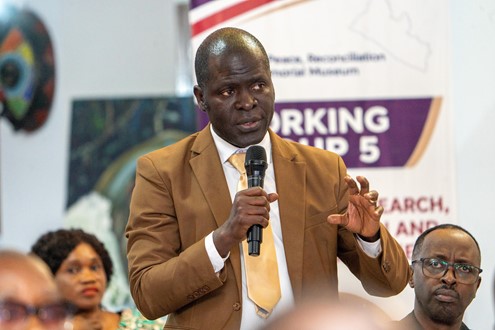
MONROVIA – History has reversed roles in Monrovia. In 1962, Nelson Mandela came here seeking Liberia’s help against apartheid. Last week, South African officials came to share their lessons. Dr. Emmanuel K. Urey Yarkpawolo frames the visit as the coach’s turn to learn. He sits on the Steering Committee for the Liberia Peace, Reconciliation and Memorial Museum. His reflection recalls Tubman’s pledge and Tolbert’s United Nations appeal. Liberia once lent its standing to Africa’s liberation. Now it borrows South Africa’s craft of public memory. The stakes are not ceremonial. Liberia’s Truth and Reconciliation Commission reported in 2009. A postwar generation is now coming of age. As THE ANALYST reports, the museum must tell them what happened.
A member of the Steering Committee for the Liberia Peace, Reconciliation and Memorial Museum, Dr. Emmanuel K. Urey Yarkpawolo, has said it is now Liberia’s turn to learn from South Africa. He made the point in a reflection dated November 22, 2026, titled “When It’s the Coach’s Turn to Learn.”
Dr. Yarkpawolo wrote that South African officials came to Monrovia from November 16 to 18, 2026, to share what their country had learned about truth and reconciliation. The visit, he noted, made him think of an earlier one.
In April 1962, Nelson Mandela came to the same city seeking Liberia’s support in the struggle against apartheid. Dr. Yarkpawolo described apartheid as a system of laws in South Africa that separated people by race and kept political power in white hands. “More than six decades later, it was our turn to learn from South Africa,” he wrote.
Study Tour Preceded Monrovia Meeting
According to Dr. Yarkpawolo, last week’s meeting followed a study tour led by Liberia’s Minister of State without Portfolio, Hadja Mamaka Bility, and Aliou M. Dia, the United Nations Development Programme (UNDP) Resident Representative in Liberia.
In South Africa, the Liberian delegation visited the Apartheid Museum, Freedom Park, and other institutions that preserve the country’s history.
The delegation also visited Rwanda, he noted. Representatives from Rwanda joined the meeting in Monrovia.
How Apartheid Shaped Daily Life
To understand why Mandela sought Liberia’s support in 1962, Dr. Yarkpawolo argued, one must first understand how apartheid shaped daily life for Black South Africans. South Africa’s laws separated people by race and kept political power in white hands, he wrote.
Those laws dictated where Black South Africans could live, work, and go to school, and denied them the right to vote in national elections.
Tubman, Tolbert Backed Liberation
Dr. Yarkpawolo recounted that Mandela recorded in his diary that President William V. S. Tubman pledged Liberia’s support for the right of Black South Africans to govern themselves. Mandela later recalled receiving US$5,000 in Liberia for the liberation movement, he noted.
Liberia also used its standing as an independent nation to challenge South Africa’s policies abroad, according to Dr. Yarkpawolo. In 1960, Liberia and Ethiopia each brought a case before the International Court of Justice (ICJ) over South Africa’s treatment of the people of Southwest Africa, now Namibia.
In 1977, he added, President William R. Tolbert, Jr. urged the United Nations Security Council and member states to act against apartheid. “South Africans led their own struggle for freedom, and Liberia stood with them,” he stressed.
Two Nations, Two Truth Commissions
Dr. Yarkpawolo noted that the visit also brought together two countries with experience of hearing survivors describe, in public, what they had lived through. South Africa’s Truth and Reconciliation Commission held hearings on abuses committed during the apartheid era.
Liberia’s own commission heard testimony about the country’s years of conflict and presented its final report in 2009. For Liberians working on the Peace, Reconciliation and Memorial Museum, he said, the exchange offered a chance to learn how South Africans tell that history to a generation born after apartheid.
Lessons for Liberia’s Own Story
After the South African guests left, Dr. Yarkpawolo said, he thought about what had brought them to Monrovia and what had brought Mandela there in 1962. Mandela came to ask Liberia to support Black South Africans in their struggle against apartheid and for the right to vote in their own country.
In November 2026, South African officials came to share how their museums tell the story of that struggle to a generation born after apartheid. “More than six decades after Mandela sought our support, Liberia could draw on South Africa’s experience as we prepare to tell the story of our own civil wars and the search for reconciliation,” he wrote.
Comments are closed.