

SEAL’s Independence Under Scrutiny -Politically Appointed Managers Test Authority’s Teeth
MONROVIA – Liberia’s state-owned enterprises have long consumed more than they return. The new State-owned Enterprises Authority (SEAL) says it finally has the legal teeth to change that. Director-General J.S.B. Theodore Momo, Jr., offered some sobering numbers. Loss-makers received US$90.5 million in transfers over five years, leaving a net drain above US$63.6 million. Only 13 percent of enterprises filed compliant quarterly reports. The diagnosis is credible, but the cure is untested. Asked whether SEAL can sanction politically connected managers, Momo spoke of review processes, not safeguards. That gap is the real story here. Performance contracts and dashboards mean little if appointees remain untouchable. SEAL’s independence will be proved in enforcement, not statute, as THE ANALYST’S GEORGE FLOMO reports.
The independence and enforcement powers of Liberia’s newly established State-owned Enterprises Authority (SEAL) have come under scrutiny amid questions about its ability to hold politically appointed managers of state-owned enterprises accountable for poor performance and violations of financial regulations.
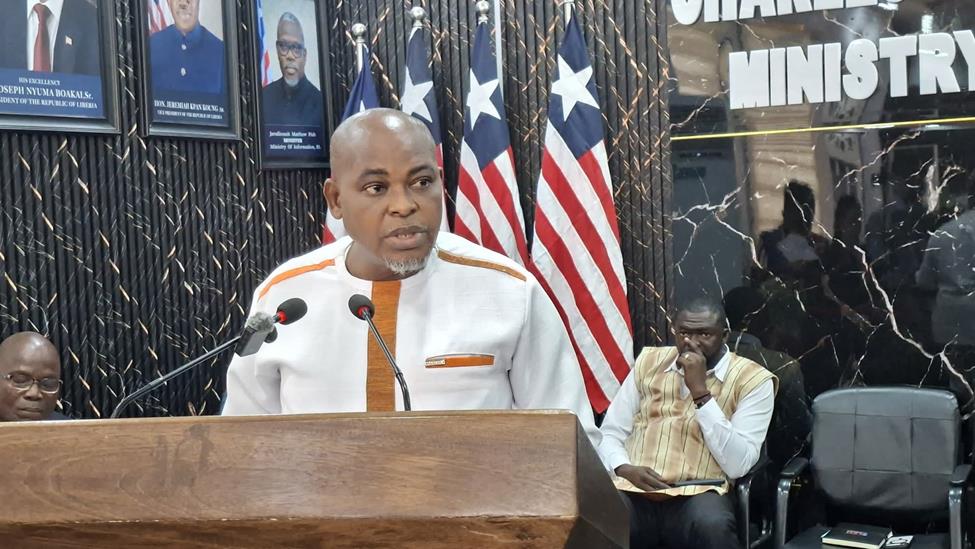
The concern emerged Thursday during the regular press briefing of the Ministry of Information, Cultural Affairs and Tourism (MICAT), where SEAL Director-General Hon. J.S.B. Theodore Momo, Jr., outlined an ambitious institutional reform agenda. The agenda is intended to strengthen oversight, improve financial discipline and address longstanding governance challenges across Liberia’s state-owned enterprises (SOEs).
While presenting the transformation of the former Bureau of State Enterprises (BSE) into an autonomous authority as a major step toward institutional accountability, Momo was questioned about the practical guarantees that would protect SEAL’s independence, particularly when dealing with managers appointed through political processes.
The question posed by THE ANALYST focused on whether SEAL would have the independence to sanction or recommend the removal of politically appointed managers who fail to meet established performance targets or violate financial regulations.
Although Momo’s recorded response touched on the Authority’s review and approval processes, including its involvement in examining procurement plans and aligning enterprise activities with approved budgets, the exchange did not clearly establish the specific safeguards that would protect SEAL from political interference when exercising its enforcement responsibilities.
The issue is significant because the effectiveness of the new institution will depend not merely on its establishment by law but also on its ability to hold enterprise management accountable, regardless of political connections or appointments. THE ANALYST’s question comes against the background of longstanding concerns about weak corporate governance, financial mismanagement and the considerable financial burden some public enterprises continue to place on the national budget.
From Bureau to Authority
Speaking at the MICAT regular briefing on Thursday, Momo maintained that the transformation of the former Bureau into SEAL represents more than a change of institutional identity. He described it as a fundamental shift in the powers, purpose and responsibilities of the country’s central oversight institution for public enterprises.
He said the reform became necessary after decades of institutional weaknesses, limited enforcement powers, inadequate resources and widespread financial and operational challenges among state-owned enterprises. For more than four decades, oversight of Liberia’s public enterprises rested with the BSE, established under Interim National Assembly (INA) Decree No. 8 in 1985.
According to Momo, the Bureau’s legal framework was inadequate to compel compliance from public enterprises, leaving it largely dependent on requests, recommendations and administrative persuasion. He explained that although the former Bureau was mandated to collect and analyze information, provide professional advice, conduct research and offer strategic guidance to public enterprises, its decree-based authority lacked a clear sanctioning mechanism.
Consequently, enterprises that failed to comply with reporting requirements or governance standards often faced limited consequences. Momo disclosed that the former Bureau also struggled with institutional inactivity and severe capacity constraints, operating with approximately 62 employees and an annual budget of less than US$1 million (L$182.36 million).
He said those limitations affected its ability to recruit qualified professionals in critical areas, including finance, law, auditing and sector regulation. The consequences extended to the coverage and quality of oversight, with the Bureau monitoring only about 20 of Liberia’s 46 state-owned enterprises, leaving the remaining 26 with minimal central supervision.
A Sector in Deficit
The Director-General further revealed that only approximately 13 percent of state-owned enterprises were submitting compliant quarterly reports, making it difficult for the government to obtain timely and reliable information about their financial positions and operational performance.
He described the situation as particularly concerning given the economic significance of the sector, which comprises 46 entities across energy, water and sanitation, maritime and ports, telecommunications, agriculture and forestry, insurance and gaming, health and welfare, and education. Together, the enterprises employ more than 10,000 Liberians and contribute over US$30 million annually to national revenue.
Providing an account of the financial difficulties confronting the sector, Momo disclosed that an assessment of 20 state-owned enterprises covering the 2020–2024 period revealed that more than US$90.5 million was transferred from the national budget to sustain chronically loss-making enterprises. However, those entities generated only approximately US$26.9 million in cumulative net operating surplus during the same period.
He said the resulting net fiscal drain exceeded US$63.6 million, excluding an additional US$116.5 million in accumulated net deficits. According to him, only about 35 percent of state-owned enterprises currently operate profitably without government subsidies.
The financial challenges, he added, are compounded by failures among some enterprises to meet statutory obligations, particularly the remittance of personal income taxes deducted from employees’ salaries and social security contributions owed to the National Social Security and Welfare Corporation (NASSCORP).
Momo said some enterprises recorded years of zero tax remittances despite maintaining active and growing payrolls, a practice that exposes employees to potential long-term pension and social protection risks. He also pointed to allegations of financial impropriety, inflated payrolls, unnecessary luxury spending and the absence of a comprehensive corporate governance framework as factors contributing to declining public confidence in state-owned institutions.
How the SEAL Act Emerged
To address these challenges, Momo said the government pursued a legal and institutional reform process that culminated in the establishment of SEAL through an Act of the National Legislature. He recounted that the proposed legislation emerged from institutional assessments and strategic planning, followed by consultations with the Governance Commission, the Law Reform Commission, state-owned enterprises and other relevant stakeholders.
The bill was subsequently submitted to the Legislature by the Executive and reviewed by relevant committees of the House of Representatives. On November 25, 2025, the House voted to repeal Article II of INA Decree No. 8 of 1985 and establish the new Authority, with the Senate subsequently concurring.
President Joseph Nyuma Boakai, Sr., approved the Act on February 6, 2026, and it was published on February 17, 2026, formally bringing SEAL into legal existence. Momo said the new legal framework gives the Authority a stronger mandate to demand financial and operational reports, review enterprise performance, recommend sanctions and strengthen compliance with governance requirements.
He emphasized that the difference between the former decree-based arrangement and the new legislation is the difference between making requests and establishing enforceable obligations. Under the new arrangement, he said, state-owned enterprises are legally required to report, account for their finances and comply with established governance standards.
The institutional autonomy provided by the Act, according to Momo, is intended to ensure that oversight decisions are guided by performance data rather than external pressure. However, the extent to which that autonomy will be reflected in actual enforcement decisions remains an important test for the Authority, particularly in cases involving politically appointed executives.
Strategic Plan 2025–2029
Meanwhile, Momo outlined a comprehensive Strategic Plan covering 2025–2029, which he said will guide the next phase of institutional strengthening and reform across the SOE sector. Among the proposed interventions is an Omnibus SEAL Amended and Restated Bill and accompanying regulations intended to harmonize the foundational laws of individual state-owned enterprises with the Public Financial Management (PFM) Act and the SEAL Act.
The Authority also intends to introduce a Corporate Governance Code and State Ownership Policy to clarify the respective responsibilities of government, enterprise boards and management. Another major component is the proposed Performance Management and Compliance System, which will introduce performance contracts for state-owned enterprises and establish consequences for both strong and poor performance.
Under the proposed arrangement, enterprises demonstrating improved performance could receive recognition and greater operational autonomy, while those failing to meet established standards would face escalating consequences. Momo also announced plans to establish a State Enterprises Information System (SEIS), a web-based platform designed to replace the existing paper-based reporting arrangements.
The system is expected to provide more timely information on enterprise finances, payrolls, assets and debts while supporting the development of a public performance dashboard through which citizens can monitor the performance of state-owned institutions. Additionally, SEAL intends to establish an SOE Fiscal Risk Management function and prepare an Annual Fiscal Risk Statement for integration into the national budget process.
To implement the reform program, Momo disclosed that the Authority’s business case projects a five-year investment of approximately US$20.35 million. The proposed financing arrangement will combine government funding, development partner support and, over time, a modest levy of 0.25 percent on revenues generated by state-owned enterprises.
He said the arrangement is intended to gradually make the Authority financially sustainable while strengthening its institutional capacity. The plan also provides for the recruitment of 159 additional professionals by 2028, alongside structured capacity-building initiatives to improve technical expertise and oversight across the sector.
Targets and Accountability
Momo said SEAL has established measurable targets against which its performance and the broader reform agenda will be assessed by the end of the strategic plan period. The Authority intends to increase the proportion of state-owned enterprises operating profitably without subsidies from 35 percent to 65 percent, raise their total contributions to the national budget by 50 percent and reduce government subsidies and bailouts by 20 percent.
It also aims to increase compliant quarterly reporting among SOEs from approximately 13 percent to 100 percent and achieve full tax payment compliance by 2029. Importantly, Momo said the Authority itself will be subject to public accountability through an annual performance contract with the President, an Annual State of the SOE Sector Report to the Legislature and the publication of its own performance results.
The Director-General maintained that reforming state-owned enterprises is essential to improving public service delivery and reducing the financial burden placed on government. He argued that properly managed public enterprises could contribute to more reliable electricity, safe drinking water, efficient ports and improved services across the country.
He also noted that reducing financial losses and unnecessary subsidies would allow government to redirect scarce resources toward critical sectors, including health, education, agriculture, roads and sanitation, in keeping with the ARREST Agenda for Inclusive Development. He said every dollar saved from inefficiency and unnecessary government support could be redirected toward national development priorities.
Call to Boards, Lawmakers
Momo called on the boards and management of state-owned enterprises to embrace the reform process by submitting timely reports, remitting statutory deductions, adopting sound corporate governance practices and treating SEAL as a partner in strengthening public institutions. He also urged the National Legislature to sustain its oversight role and support the proposed legislative reforms, while encouraging relevant government institutions to improve coordination.
Momo called on development partners, civil society organizations and the media to support the reform agenda through technical assistance, public education and independent scrutiny. He particularly emphasized that state-owned enterprises belong to the Liberian people and that citizens must demand transparency, accountability and improved services from institutions operating in their interest.
In closing, Momo credited President Boakai’s leadership and political commitment for advancing the transition from the former Bureau to the autonomous Authority. He cited the President’s support for the SEAL Act and broader accountability initiatives as important foundations for the reform process.
While the establishment of SEAL represents a significant institutional milestone, the real test of the new Authority will be whether it can translate its expanded legal mandate into measurable improvements in financial discipline, management accountability, service delivery and the protection of public resources.
Ultimately, the question of whether SEAL can independently hold politically appointed managers accountable will remain central to public assessment of the institution. Its ability to act without fear or favor could determine whether the transition from the former Bureau to an autonomous Authority delivers the accountability and financial discipline that Liberians have long expected from their public enterprises.
Comments are closed.