
Cllr. Sherman Calls for Unity Party Renewal -Pleads for unity, reform and preparation
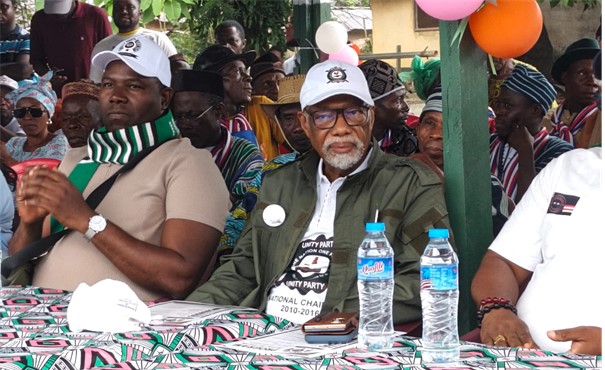
MONROVIA – For governing political parties, electoral victory is only the beginning of a far more demanding challenge—maintaining internal cohesion, sustaining institutional capacity and preparing early for future contests. History has repeatedly shown that parties often weaken not because they lose elections but because they neglect loyal supporters, fail to build durable financial structures and postpone strategic planning until campaigns begin. Former Unity Party National Chairman Cllr. H. Varney G. Sherman believes Liberia’s ruling Unity Party now stands at precisely such a crossroads. Using an occasion intended to celebrate his political legacy, he instead delivered a message of introspection, urging reconciliation, organizational reform and disciplined preparation to ensure the party remains electorally competitive well beyond its current mandate. The analyst’s H. Matthew Turry reports.
Calls for Sustainable Political Machinery
In what amounted to both a moment of reflection and a roadmap for the future of Liberia’s ruling Unity Party, former National Chairman and Grand Cape Mount County Senator Cllr. H. Varney G. Sherman used the occasion of being honored as the “Father of the Re-Union Initiative of the Unity Party” to deliver a politically significant address, challenging the party to heal internal divisions, reconnect with estranged supporters, institutionalize sustainable financing and begin preparations now—not during an election year—for the 2029 general elections.
Former Unity Party National Chairman and former Grand Cape Mount County Senator Cllr. H. Varney Gboto-Nambi Sherman used his recognition as the “Father of the Re-Union Initiative of the Unity Party” to issue what observers described as one of the strongest internal political messages delivered to the ruling party since its return to power. He urged the leadership to heal divisions, re-engage neglected partisans and establish a sustainable financial structure well ahead of the 2029 elections.
Speaking Saturday while accepting the honor during the Unity Party Reunion Initiative program in Buchanan, Grand Bassa County, Sherman described the recognition as one of the greatest distinctions any political leader could receive.
“When, as a member of an organization, its membership decides to honor you, it is an honor that is incomparable to most other honors in a person’s lifetime,” Sherman declared. “For that reason and many others, I humbly accept the distinction as Father of the Re-Union Initiative of the Unity Party.”
Rather than limiting his remarks to expressions of gratitude, however, the former party chairman transformed his acceptance speech into a candid assessment of the challenges confronting the governing party, warning that political organizations that neglect their supporters ultimately weaken themselves.
Warning against Disenchantment
Drawing from decades of political experience spanning the former Liberia Action Party and the Unity Party, Sherman said he had witnessed firsthand the frustration many loyal partisans experience after elections.
“As a senior politician of the erstwhile Liberia Action Party and later the Unity Party, I have experienced the daunting effect of disenchantment, disillusionment and disaffection by partisans, especially those who worked so hard at election time for the success of their political party and later found that their political party had neglected them or not shown much care about them,” he said.
According to Sherman, this recurring pattern has given rise to one of Liberia’s most familiar political expressions.
“Too often over my years of politics, I have heard the expression: Politics is interest, which means that when a political party is successful at elections, it should address the interests of its partisans. If it doesn’t, partisans get disenchanted, disillusioned and disaffected.”
He cautioned that such neglect poses a serious threat to the long-term survival of any political institution.
“That is not good for the future of any political party.”
Sherman therefore commended those spearheading the Unity Party Reunion Initiative, acknowledging the enormous responsibility of restoring confidence among members who had drifted away from the party.
“For all of you who are engaged with getting disenchanted, disaffected and disillusioned partisans of Unity Party re-involved and re-engaged with Unity Party, you have my personal congratulations.”
Recognizing the difficulty of their assignment, he encouraged them not to relent.
“I know your work is difficult, but please don’t give up. The success of Unity Party will depend on the success of the work you do, and I will continue to be with you every step of the way. May the Almighty continue to guard you and enhance the work you do.”
Sustainable Party Financing
Beyond reconciliation, Sherman shifted attention to what he described as another pressing concern confronting the party—its long-term financial sustainability.
Reflecting on his tenure as chairman of the committee that drafted the Unity Party Constitution in 2010 and his role in presiding over the Ganta Convention at which it was adopted, Sherman recalled that delegates unanimously endorsed provisions intended to make the party financially self-sustaining through contributions from members who benefited from the party’s electoral victories.
“It is the direct support of our Party by those whose employment or opportunities were based on the success of Unity Party at any election, which is stated as the main source of funding for Unity Party.”
However, Sherman openly acknowledged that the constitutional financing provisions were never effectively implemented—even during his own administration.
“Unfortunately, during my tenure as National Chairman of the Unity Party (2010 to 2016), my administration was not successful in getting these funding provisions of our Party implemented, and I don’t wish to delve into the reason why.”
He added that, to the best of his knowledge, successive party administrations had likewise failed to operationalize those constitutional requirements.
Comments are closed.