

Tequah Rejects High Threshold -Rivercess lawmaker defends smaller counties’ representation
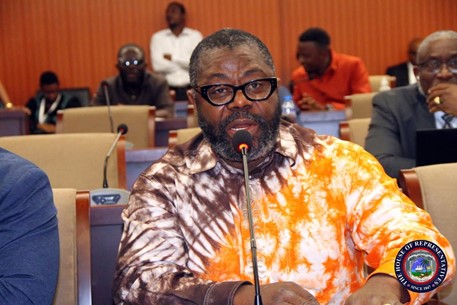
MONROVIA – A quiet legislative debate over numbers is fast becoming a battle over who counts in Liberia’s democracy. Representative Steve Tequah of Rivercess County District #2 has condemned proposals to set the electoral threshold as high as 130,000. Behind the arithmetic, he argues, lies a policy choice that would sideline rural counties in favor of urban population centers. His case rests squarely on Article 80(d) of the Liberian Constitution and its explicit mandate of equal county representation. It also rests on hard geography: oversized districts, he warns, put representatives beyond their constituents’ practical reach. Tequah’s call for a rural caucus signals that the threshold fight may split the Legislature along county lines. THE ANALYST reports.
Representative Steve Tequah of District #2, Rivercess County, has issued a strong public caution regarding the ongoing legislative debates surrounding the national electoral threshold. As the Legislature considers setting a high population threshold for constituency representation, with figures as high as 130,000 being discussed, Tequah warned that such policies threaten to diminish the voices of citizens in smaller, rural counties.
“The proposed high-population threshold is more than a mathematical exercise; it is a policy tool that risks sidelining the development and representation of our most vulnerable regions,” Tequah stated. “By applying a one-size-fits-all, urban-centric approach, we are effectively telling the people of rural or smaller counties that their participation in national governance is secondary to sheer population volume.”
Constitutional Equity at Stake
The Rivercess County lawmaker anchored his position in Article 80(d) of the Liberian Constitution, which mandates the Legislature to ensure equal representation. He argued that any threshold that compromises the minimum representation of smaller counties is a violation of the spirit of constitutional equity.
Tequah also highlighted what he called the accessibility gap in rural representation. He noted that if districts become too large due to high thresholds, the ability of a representative to engage with, oversee, and serve constituents is severely weakened by the logistical challenges of rural Liberia.
Call for Weighted Model, Unity
Rather than rigid quotas, the lawmaker urged senators of rural and smaller counties, and all other senators who believe in constitutional equity, to embrace a weighted approach that accounts for the geographic and developmental realities of rural Liberia. Calling for solidarity, he further urged colleagues from across the smaller administrative subdivisions to form a unified caucus to block legislation that would diminish their counties’ influence in the House of Representatives, although some colleagues reportedly downplayed the call.
“Our Republic is not measured by the number of seats concentrated in urban centers, but by how well we protect the participation of every citizen in every corner of our country,” the statement concluded. “We must ensure our democracy remains inclusive, accessible, and truly representative of every inch of Liberian soil.”
Tequah remains committed to advocating for a balanced legislative framework that protects the electoral viability and developmental needs of Rivercess County and all similarly situated districts across Liberia. His statement positions him among the early legislative voices resisting the high-threshold push.
Comments are closed.