

Joekai Defends Conduct Against Criticism -Differs with Sen. Konneh’s ‘explosive allegations’
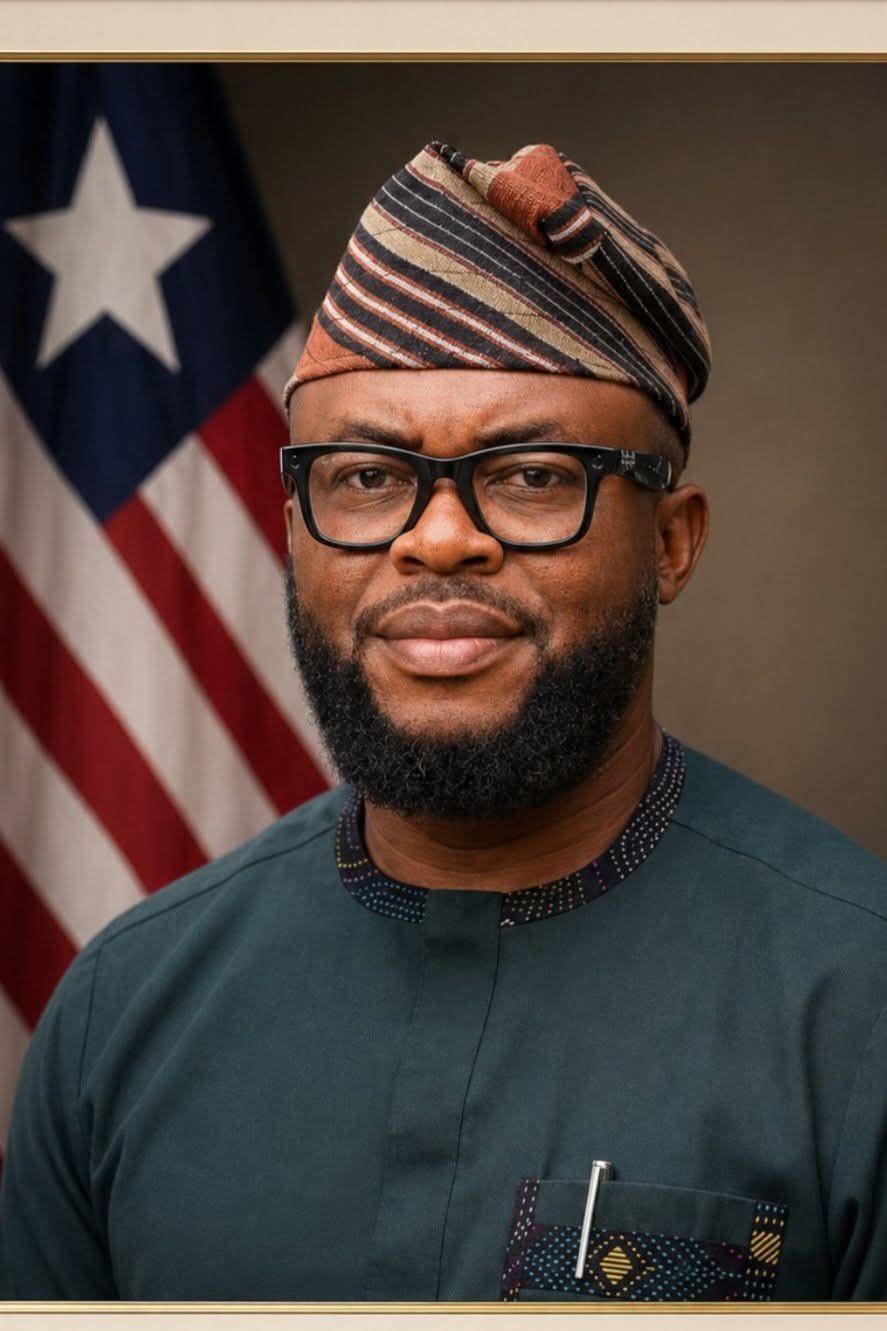
MONROVIA – A fierce and politically sensitive confrontation between Civil Service Agency Director-General Dr. Josiah F. Joekai, Jr. and Gbarpolu County Senator Amara Konneh is rapidly evolving into a major national debate over constitutional freedoms, political neutrality, and the interpretation of Liberia’s Code of Conduct governing public officials. The controversy, triggered by criticism surrounding Joekai’s participation in activities associated with the National Independent Movement for Boakai Organization, has now expanded far beyond personal disagreement and entered the broader territory of governance credibility, institutional consistency, and selective enforcement of ethics regulations. Increasingly, the dispute is exposing deep national anxieties regarding whether standards previously enforced against others are now being applied equally within the current political establishment. THE ANALYST reports.
Joekai Breaks Silence
Civil Service Agency Director-General Dr. Josiah F. Joekai, Jr. has issued a forceful public response to mounting criticism from Gbarpolu County Senator Amara Konneh regarding his participation in activities associated with the National Independent Movement for Boakai Organization, commonly known as NIMBO, insisting that he violated no law and accusing the Senator of promoting deliberate distortions and misleading comparisons.
The controversy, which initially emerged as political criticism surrounding Joekai’s appearance at the NIMBO event, has now transformed into a much larger national debate involving constitutional rights, political neutrality, public ethics, governance consistency, and interpretation of Liberia’s Code of Conduct for presidential appointees.
In his official statement, Dr. Joekai declared that while he ordinarily chooses to remain focused on service delivery and national reforms rather than political distractions, it had become necessary to address what he described as “deliberate distortions and false equivalencies” being promoted publicly, especially by a sitting Senator.
The CSA Director-General argued that recent attacks against him were politically motivated and intentionally misleading, particularly efforts to compare his circumstances to those involving other officials previously subjected to controversy or disciplinary actions.
Emma Glassco Comparison Rejected
One of the strongest portions of Joekai’s response centered on Senator Konneh’s alleged attempt to compare his conduct to issues surrounding Madam Emma Glassco.
According to Joekai, such comparisons are fundamentally dishonest because the two positions operate under entirely different legal and administrative frameworks.
“Madam Glassco occupied a tenure position governed by distinct legal and policy limitations,” Joekai stated. “I, on the other hand, serve as a political appointee at the will and pleasure of the President of the Republic of Liberia and have not violated any laws.”
The CSA boss argued that these distinctions are legally significant and cannot reasonably be ignored for political convenience.
“These are fundamentally different legal and administrative frameworks that cannot reasonably or credibly be compared,” he emphasized.
That argument now sits at the center of the broader national debate unfolding around the controversy.
Supporters of Joekai maintain that political appointees occupy a separate constitutional category distinct from ordinary civil servants and therefore enjoy broader latitude regarding political expression and association.
Critics, however, insist that presidential appointees themselves remain bound by ethical restrictions intended to preserve neutrality and professionalism within government service.
“I Am Not A Civil Servant”
Joekai further insisted that many criticisms directed against him rest upon a fundamentally flawed understanding of his official status within government.
“Additionally, I am not a civil servant, I am a political appointee with the mandate to head and manage the civil service,” he declared.
According to him, civil service regulations apply specifically to civil servants and not presidential appointees serving directly under executive authority.
“Civil service regulations are binding on civil servants, not political appointees,” Joekai stated while dismissing allegations that he violated civil service regulations as “utterly dishonest, deceptive, and completely erroneous.”
That position is already fueling broader legal and constitutional discussions across political and governance circles.
Some legal analysts argue that while presidential appointees may not fall under ordinary civil service restrictions, they nevertheless remain subject to provisions contained within Liberia’s National Code of Conduct for public officials.
Others contend that constitutional rights relating to freedom of association and political expression cannot simply disappear because an individual serves within government.
Those unresolved tensions are now increasingly defining the national discourse surrounding the Joekai-Konneh confrontation.
Constitutional Rights Defense Emerges
A major pillar of Joekai’s defense rests upon constitutional arguments regarding citizenship rights and political freedoms.
“For the record, I am not a member of any political party in Liberia,” the CSA Director-General asserted.
Although acknowledging that he has exercised constitutional rights to support candidates based upon personal convictions and national interests, Joekai argued that such support does not constitute formal political party membership.
He additionally insisted that at no point did he use the Civil Service Agency or his official office to engage in partisan political activities.
According to him, his attendance at the NIMBO event occurred entirely within the boundaries of lawful constitutional freedoms guaranteed to every Liberian citizen.
“My attendance, like many other officials of government at the NIMBO event on Sunday, not a week day, was entirely within my constitutional rights as a Liberian citizen and did not interfere with or compromise my official responsibilities,” Joekai explained.
He further warned against efforts to criminalize or politically attack citizens merely for exercising lawful constitutional rights within a democratic society governed by law.
That constitutional argument is rapidly becoming one of the most contested aspects of the entire controversy.
Konneh Accused of “Bitterness”
Beyond defending his own conduct, Joekai also launched a sharp counterattack against Senator Konneh himself.
The CSA Director-General expressed disappointment over what he described as “a growing pattern of bitterness, hostility, and relentless attacks” by the Senator against individuals associated with or supportive of President Joseph Nyuma Boakai’s administration.
“A sitting Senator should elevate public discourse and contribute constructively to national dialogue, not promote resentment, personal vendettas, and politically motivated misinformation,” Joekai stated.
That accusation significantly escalated the political tone of the dispute, moving it beyond purely legal or ethical arguments into direct political confrontation.
Observers say the increasingly personal nature of the exchanges reflects deeper tensions already emerging within Liberia’s post-election political environment, where governance expectations, reform promises, and partisan competition continue shaping national debate.
MCC Dismissals Disputed
Joekai also directly challenged claims reportedly made by Senator Konneh concerning dismissals involving employees of the Monrovia City Corporation.
According to the CSA boss, allegations that MCC employees were disciplined strictly for political reasons are entirely false and deceptive.
“His claim has no iota of truth,” Joekai argued.
Instead, he maintained that disciplinary actions involving those individuals were based upon repeated misconduct, violations of standards of conduct, public insults against government officials, dissemination of false information, and behavior inconsistent with professional ethics expected within public service.
“No serious government anywhere in the world tolerates indiscipline, abuse, and coordinated attacks against public institutions by individuals simultaneously serving within those same institutions,” Joekai stated.
That rebuttal directly challenges one of the core arguments increasingly advanced by critics of the administration: that governance standards are being enforced selectively depending upon political affiliation.
CSA Reform Agenda Highlighted
Amid the controversy, Joekai also used the opportunity to spotlight reforms currently underway within the Civil Service Agency under his leadership.
“As Director General of the Civil Service Agency, I remain committed to restoring discipline, professionalism, accountability, integrity, and efficiency within the public service,” he declared.
According to him, the CSA has already undertaken significant reforms aimed at strengthening governance systems, modernizing public sector administration, improving employee accountability, and enhancing professionalism across government institutions.
The Director-General further claimed that these reforms are already producing measurable national impact and attracting recognition both within Liberia and across the African continent.
Supporters of Joekai argue that his reform efforts within the public sector should not be overshadowed by politically charged disputes intended to distract attention from ongoing institutional modernization initiatives.
Critics, however, insist that governance reforms themselves become vulnerable whenever allegations of selective ethics enforcement emerge at senior levels of public administration.
Governance Debate Deepens
Increasingly, the Joekai-Konneh dispute is becoming far larger than a disagreement between two officials.
Across Liberia’s political landscape, the controversy is now fueling broader national discussion regarding the relationship between constitutional freedoms and ethical restrictions imposed upon public officials.
Lawyers, governance advocates, civil society organizations, and political commentators continue debating whether Liberia’s Code of Conduct applies equally to presidential appointees or whether such officials retain broader constitutional protections concerning political activity.
The issue is especially sensitive because Liberia’s political history remains deeply shaped by accusations of selective justice, politicized institutions, and inconsistent enforcement of governance rules depending upon which political forces occupy power.
Consequently, controversies touching upon ethics, political neutrality, and constitutional rights almost always resonate far beyond the immediate personalities involved.
National Attention Intensifies
Joekai concluded his statement by insisting that disagreement with government policies should never justify distortion of facts or personal attacks against individuals serving the country with professionalism and integrity.
“Liberia’s democracy will only advance through responsible leadership, truthfulness, fairness, and constructive engagement,” he stated.
The CSA Director-General additionally reaffirmed that he remains fully focused on his national responsibilities and committed to advancing meaningful public service reforms despite political criticism.
“No amount of political hostility or misinformation will distract me from the important work of advancing meaningful public service reforms for the benefit of our nation and its people,” Joekai declared.
Yet despite those assurances, the controversy shows little sign of fading.
Instead, public scrutiny surrounding the matter continues intensifying as Liberia confronts difficult unresolved questions involving constitutional freedoms, institutional neutrality, governance consistency, and the ethical obligations attached to public office.
And increasingly, the broader national debate now centers on one critical issue: whether Liberia’s governance standards apply equally to everyone—or shift depending upon political proximity and state power.
Comments are closed.