
‘War Crimes Court Process Stalling’ -OWECC-L accuses officials of delaying justice
MONROVIA – Liberia’s long-anticipated War and Economic Crimes Court now faces renewed uncertainty, as internal tensions within government threaten to derail a process seen as central to national accountability. What was once framed as a defining reform under the Boakai administration is increasingly entangled in bureaucratic delays and institutional resistance. For advocates of justice, the concern is no longer theoretical but immediate: whether political will can withstand competing interests within the state itself. Accusations of obstruction are surfacing and the credibility of Liberia’s transitional justice agenda is once again under scrutiny. As THE ANALYST reports, the stakes extend beyond legislation, touching on reconciliation, rule of law, and the country’s unfinished reckoning with its violent past.
Liberia’s fragile journey toward transitional justice has encountered a troubling new obstacle, with the Office for the Establishment of the War and Economic Crimes Court in Liberia (OWECC-L) raising alarm over what it describes as deliberate efforts within government to stall the creation of the long-awaited court.
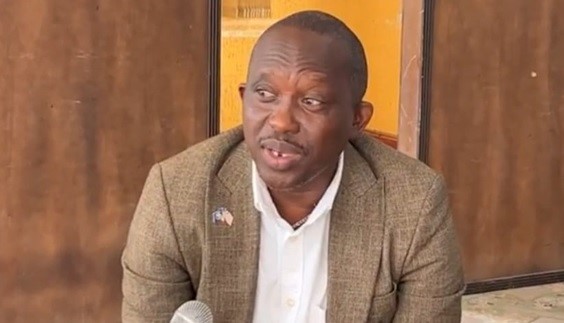
In a candid and unusually direct public statement, Executive Director Dr. Cllr. Jallah A. Barbu disclosed growing frustration with what he termed “non-cooperative attitudes” among key government officials, whom he accused of slowing progress through both action and inaction.
Speaking on a local radio program in Monrovia, Dr. Barbu identified the Minister of Justice, the President’s Legal Advisor, and the National Security Advisor as central figures in the delays, alleging that their posture has hindered the timely advancement of the court’s establishment process.
According to him, the immediate source of the delay lies in the failure to review two critical draft laws submitted by OWECC-L. These draft instruments, intended for technical assessment and subsequent transmission to the Legislature, have reportedly remained pending at both the Ministry of Justice and the Office of the President.
Dr. Barbu specifically named Justice Minister Oswald N. Tweh, Presidential Legal Advisor Cllr. Busheben Keita, and National Security Advisor Atty. Samuel Kofi Woods as adopting a stance that has effectively slowed the process.
While the officials named have not publicly responded to the allegations, the implications of the claim are profound, suggesting internal divisions within government on an issue that has long been framed as a cornerstone of Liberia’s rule-of-law agenda.
Dr. Barbu warned that the continued delay risks undermining national efforts to deliver justice, accountability, and reconciliation in the aftermath of Liberia’s brutal civil conflicts, which spanned from 1989 to 2003 and claimed an estimated 250,000 lives.
“These delays threaten to erode public confidence in the government’s commitment to justice,” he stated, adding that any perception of obstruction could reinforce long-standing concerns about impunity in Liberia’s political system.
The War and Economic Crimes Court, first recommended by the Truth and Reconciliation Commission (TRC), has been widely viewed as a critical mechanism for prosecuting individuals responsible for war crimes, crimes against humanity, and economic crimes committed during the conflict period.
Despite this recommendation, progress toward establishing the court has been slow, shaped by political sensitivities, legal complexities, and competing national priorities.
Dr. Barbu suggested that the current delays may be rooted not only in bureaucratic inertia but also in deeper political dynamics.
“There are elements in this government that are stalling the War Crimes Court process because they want a failed process,” he asserted, pointing to the possibility that some actors may have personal or political interests in delaying or preventing the court’s establishment.
He further alleged that certain individuals within government may have been directly or indirectly involved in Liberia’s past conflicts, or may be seeking to protect associates who could face prosecution if the court becomes operational.
Such claims, while difficult to independently verify, reflect a broader narrative that has long surrounded the issue of transitional justice in Liberia—one in which political considerations often intersect with legal processes.
For victims and survivors of the civil war, the stakes are deeply personal. Decades after the conflict, many continue to await justice, viewing the establishment of the court as a long-overdue step toward accountability and closure.
Dr. Barbu emphasized that the court is not merely a legal initiative but a moral imperative, essential for sustaining peace and strengthening Liberia’s democratic institutions.
“We cannot afford to fail the victims of our past. Justice delayed is justice denied,” he declared, echoing a sentiment widely shared among civil society organizations and human rights advocates.
OWECC-L has called on all branches of government to demonstrate genuine political will and cooperation, urging that the process be advanced transparently and efficiently.
The organization’s appeal aligns with longstanding calls from both domestic and international stakeholders, who have consistently urged Liberia to implement the recommendations of the TRC.
Civil society groups and international partners have warned that continued delays risk entrenching a culture of impunity, undermining the rule of law and weakening public confidence in state institutions.
At the same time, Dr. Barbu acknowledged that there remains significant support for the court, including what he described as strong political will from President Joseph Nyuma Boakai.
However, he cautioned that this commitment could be undermined if internal resistance within government is not addressed.
“What we have is very good political will from the President, but it is being strangulated by individuals,” he said, underscoring the tension between executive intent and institutional execution.
The situation places Liberia at a critical crossroads in its transitional justice journey. On one hand, the legal and institutional frameworks necessary for establishing the court appear to be taking shape. On the other, delays and internal disagreements threaten to derail momentum at a crucial stage.
For governance experts, the issue highlights the complexity of implementing transitional justice in post-conflict societies, where the pursuit of accountability often intersects with political realities.
The path forward will require not only legal precision but also sustained political courage and institutional coordination.
As Liberia continues to grapple with its past, the question remains whether the current generation of leaders will succeed in delivering the justice that has long been promised—or whether the process will once again be delayed, leaving victims without closure and the nation without a definitive break from its history of impunity.
Comments are closed.