
Yellow Machines Rollout Advances-Govt. pushes for more roads, jobs nationwide
MONROVIA – Liberia’s ambitious infrastructure drive took a decisive step forward as authorities outlined progress in the nationwide deployment of heavy-duty “yellow machines,” positioning the initiative as both a catalyst for rural transformation and a test of governance credibility. While logistical delays and terrain challenges persist, officials insist the program remains firmly on track, with expanded timelines and structured oversight mechanisms introduced to safeguard delivery. At its core, the initiative seeks to reconnect isolated communities, stimulate agricultural productivity, and generate employment at scale—placing significant public expectation on its success. As THE ANALYST reports, the implementation is deepening, and attention is increasingly shifting from promise to performance, with accountability, coordination, and sustained execution emerging as defining factors.
The Executive Chairperson of the Yellow Machines Board of Authority (YMBOA), Brownie J. Samukai, on Tuesday provided a comprehensive national update on the rollout of earth-moving equipment, emphasizing that the program is steadily progressing despite global shipping constraints and local logistical complexities.
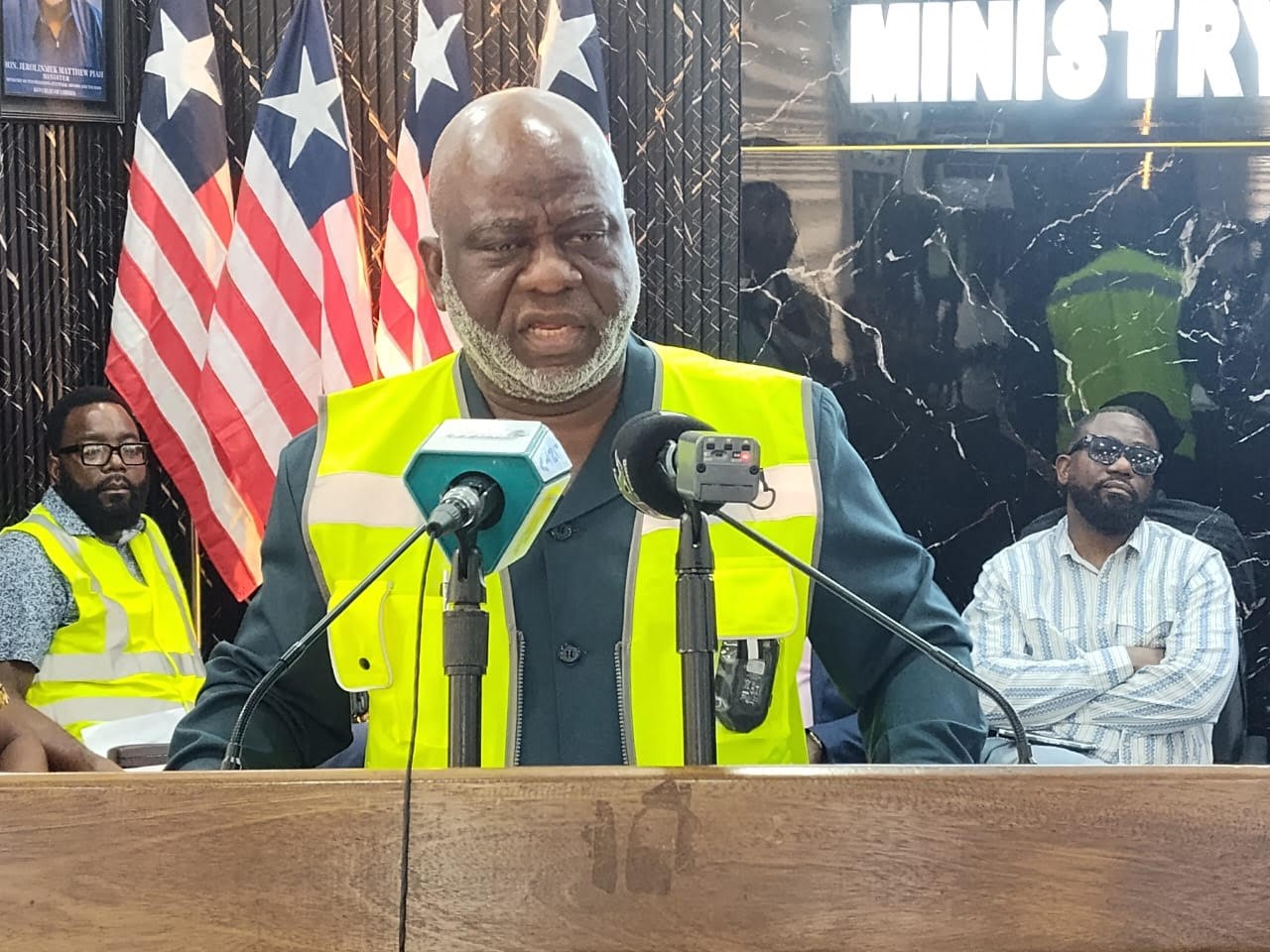
Speaking at the Ministry of Information’s regular press briefing, Mr. Samukai disclosed that an initial batch of 110 machines, which arrived in Liberia on February 22, 2026, has already been deployed to various operational centers across the country in preparation for large-scale road rehabilitation works.
The deployment strategy, he explained, is anchored on a decentralized operational model involving 19 hubs nationwide, ensuring that all 15 counties are covered. Larger counties—including Bong, Lofa, Nimba, and Grand Bassa—will host two hubs each, reflecting their size and infrastructural demands, while smaller counties will operate with a single hub.
According to him, site selection has been guided by detailed surveys conducted across subdivisions, with particular attention paid to accessibility challenges in remote areas where weak bridges and poor road conditions could hinder operations.
Mr. Samukai further revealed that an additional consignment of 168 machines is currently within the sub-region and expected to arrive shortly, although delays have been encountered due to international shipping logistics. The equipment, he noted, is being transported via a large vessel docked in Abidjan, from where it will be redistributed to Liberia using smaller vessels.
“Given the size of the vessel and the nature of the cargo, the process will take some time,” he explained, while expressing confidence that the shipment would arrive within a week or thereabout.
At the heart of the initiative is a clear operational focus: expanding and rehabilitating feeder roads across the country. These include farm-to-market routes, town-to-town connections, and access roads to essential public services such as schools and hospitals—critical infrastructure gaps that have long constrained economic activity and service delivery in rural Liberia.
Mr. Samukai stressed that the machines are strictly designated for public infrastructure purposes, dismissing concerns about potential misuse.
“These machines are mission-oriented. They will only move to accomplish clearly defined public tasks approved by the Board,” he asserted, signaling a zero-tolerance approach to diversion or politicization of the assets.
To reinforce accountability, the YMBOA Chairperson disclosed that each county will have a designated coordinator operating under a Special Presidential Committee framework. These coordinators will oversee day-to-day operations, while project decisions will be made collaboratively with county authorities, including superintendents, local leaders, and elected officials.
“No single individual will be allowed to hijack or delay the decision-making process,” he warned, underscoring the importance of collective governance in ensuring the program’s integrity.
Beyond infrastructure, the initiative is also expected to generate significant employment opportunities. Mr. Samukai announced that approximately 1,127 Liberians will be recruited as machine operators, mechanics, and support personnel across the counties.
In response to high public interest, the application deadline has been extended from March 30 to April 10, 2026, allowing more qualified candidates to participate. Recruitment, he added, will prioritize local residents within each county, with cross-county transfers considered only where necessary.
“All Liberians must benefit from this initiative,” he emphasized, linking employment directly to the program’s broader developmental objectives.
Attention is also being directed toward operational sustainability. Mr. Samukai disclosed that construction of machine hubs will commence in April, beginning with the southeastern region—particularly Grand Kru County, identified as one of the most challenging terrains.
Each hub is expected to include essential infrastructure such as fuel storage systems with up to 15,000-gallon capacity, maintenance bays, equipment storage facilities, and solar-powered lighting to support security and nighttime operations. Though described as basic, these facilities are designed to ensure functional efficiency and long-term maintenance of the machines.
The initiative is further strengthened by inter-agency collaboration. The Ministry of Public Works, Ministry of Internal Affairs, and the Armed Forces of Liberia are all playing supporting roles, with the AFL’s engineering unit specifically tasked with assisting in hub construction and operational oversight.
Mr. Samukai also highlighted the Ministry of Finance’s responsiveness in facilitating funding, pointing to a coordinated government approach aimed at ensuring timely implementation.
Technical capacity development remains another pillar of the program. Selected operators will undergo rigorous testing and specialized training, including instruction from foreign equipment suppliers, to ensure safe and efficient handling of the machinery. Full-scale operations, he indicated, are expected to commence by August 2026 following the completion of recruitment and training.
Despite acknowledging the challenges posed by difficult terrain and the impending rainy season, Mr. Samukai expressed confidence in the program’s transformative potential.
“We cannot afford to have these machines sitting as white elephants,” he stated. “They must work for the Liberian people.”
The yellow machines initiative, widely regarded as a cornerstone of the government’s infrastructure agenda, now stands at a critical juncture. With deployment underway and expectations high, its success will depend not only on equipment and funding, but on sustained coordination, transparency, and disciplined execution.
Comments are closed.